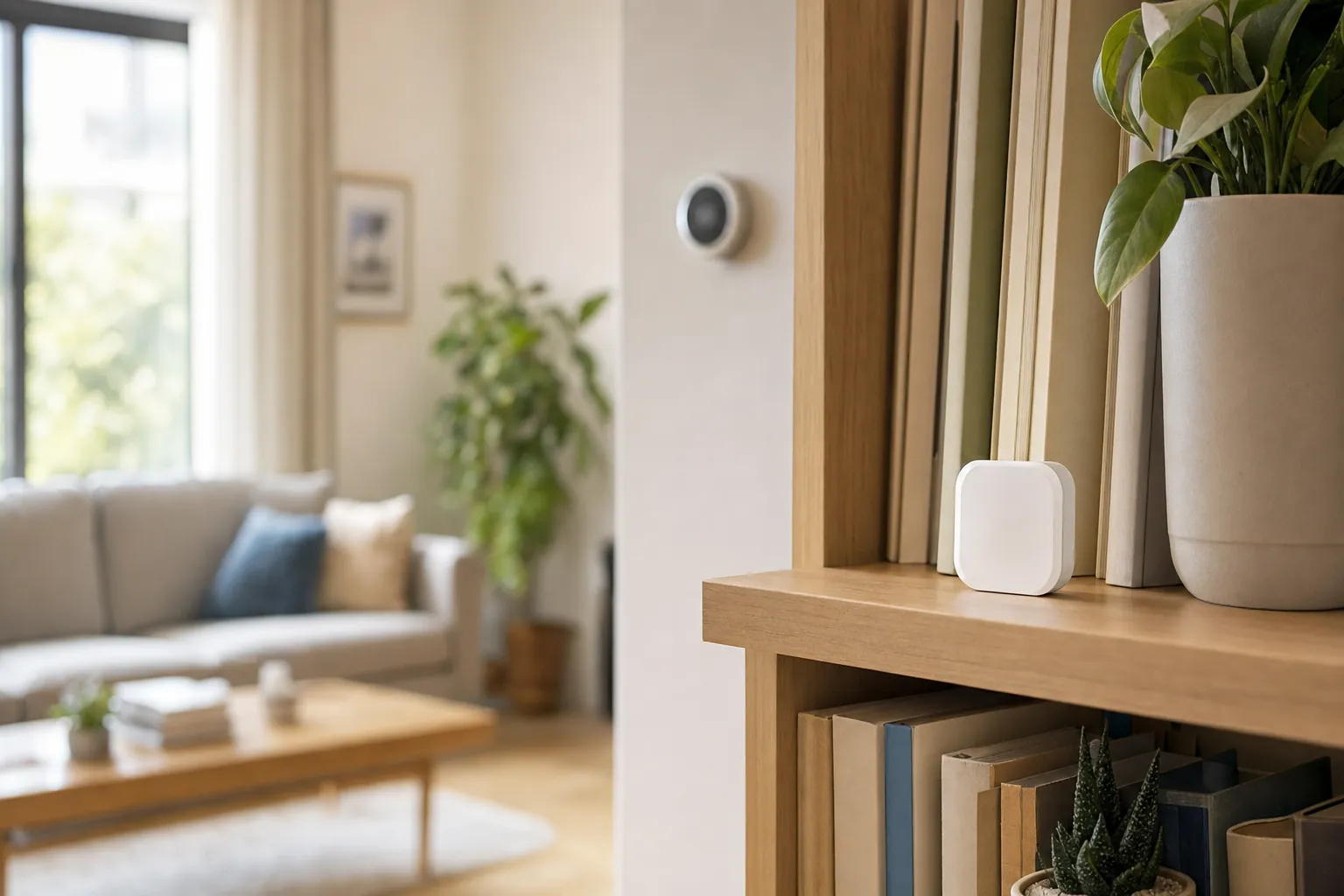
A compact room sensor in a bright home interior

Room comfort

CO2 Monitor for Home: What to Check Before You Buy

A CO2 monitor can help you notice when an occupied room needs a closer look at airflow. Choose one for the room, feedback, and response you will actually use.

Start with the room

The useful question is not just what the display says. It is what changes in the room when the reading changes.

A good monitor turns a vague feeling, such as a stale office or stuffy bedroom, into a pattern you can observe. It should make the next decision simpler, whether that means opening a window, using ventilation, changing the room setup, or getting professional advice for a persistent issue.

Before you buy

Three checks make a home CO2 monitor more useful from the first week.

01

Choose one room with a real question.

A CO2 monitor is most useful when it helps you understand one repeated problem: a home office that feels stale by afternoon, a bedroom that gets stuffy overnight, or a basement room that is regularly closed off. Start there instead of trying to monitor every room at once.

02

Put it where the air is being used.

Place the monitor away from an open window, supply vent, kitchen stove, or a person breathing directly on it. A desk, shelf, or nightstand in the occupied part of the room is usually more useful than a spot right beside the door or floor.

03

Plan the response before the alert.

A number matters only when it leads to a sensible next step. Decide whether you can open a window, run a ventilation fan, take a short break in another room, or check whether the HVAC system needs attention. Do not buy a monitor hoping it will fix airflow by itself.

Choose by use

The best place for a monitor is where the room already gives you a reason to pay attention.

A monitor does not need to become another dashboard for the whole house. Start in the room where the answer could change a daily habit or help you decide whether a larger ventilation conversation is needed.

A home office that feels heavy by late afternoon

A monitor can help show whether a closed door, several people, or limited fresh-air exchange lines up with that pattern. Start with a location where the device will stay put during the workday, then compare a few normal days before changing the room.

A bedroom shared overnight

A bedside reading can be useful when a room is closed for long stretches. Keep the device clear of pillows, a headboard, or the direct path of a fan. The goal is to understand the room, not to watch a screen through the night.

A finished basement or enclosed bonus room

These rooms can have different airflow from the rest of the home. A monitor may help you spot a pattern around closed doors, gatherings, or a ventilation fan that is not being used. Persistent concerns deserve a broader home and HVAC check.

Readings in context

A monitor is more helpful when you compare ordinary room patterns instead of reacting to one moment.

Give the device time to settle.

Follow the manufacturer instructions after first setting up the monitor or moving it to a new location. Then leave it in one consistent spot for several days. The first useful comparison is often the same room at similar times, such as a quiet morning, a closed-door work block, or a normal night of sleep.

Look for the room routine behind the change.

Notice what happens before the reading rises or falls. A closed door, a window, a cooking routine, guests, a bathroom fan, or the HVAC schedule can all change the air in a room. The point is not to chase a perfect number. It is to identify the everyday condition that creates a predictable pattern.

Use alerts sparingly.

Phone alerts can be useful when they remind you to check a room you regularly forget about. Too many alerts become background noise. Start with one calm notification or a simple review of the history, then keep it only if it leads to a real action that makes the room more comfortable.

Do not confuse measurement with diagnosis.

A CO2 monitor can add context to an airflow question, but it cannot identify every source of poor indoor air or solve a mechanical problem. If a room has persistent odors, visible moisture, combustion concerns, unusual symptoms, or equipment that is not working properly, use the appropriate safety device and seek qualified help.

Choose the useful features

Pick a monitor that helps you understand the room, not one that creates another screen to manage.

A clear, readable display.

When the monitor will live in one room, an easy-to-read display can be more valuable than a long feature list. You should be able to understand the basic status at a glance without opening an app. Check how the screen looks in the room's normal light and whether it can be dimmed for a bedroom.

History when a pattern matters.

A trend view is helpful when you want to compare a room across a day, week, or routine. It can show whether an evening pattern changes after you open a door or use a fan. Do not assume an app makes a monitor better. It is worthwhile only when you will look at the history and use it to test a practical change.

Power that suits the placement.

Consider where the monitor will sit before choosing rechargeable, battery-powered, or plug-in power. A desk can make charging easy. A bedroom shelf may need a cable you can route safely. A device that is always unplugged or moved from room to room will not give you a dependable pattern.

Claims that match the sensor.

Read the product description closely. Some devices combine several measurements, while others focus on one. That can be useful, but it does not make one monitor a substitute for smoke alarms, carbon monoxide alarms, radon testing, moisture checks, or professional indoor-air assessment. Buy for the question you actually need answered.

Keep the safety roles clear

A CO2 monitor belongs beside good home habits, not in place of the devices that protect the household.

  1. Keep carbon monoxide alarms separate.Carbon monoxide alarms are designed for a different gas and a different safety job. Maintain them according to their instructions, even when you use a CO2 monitor for room comfort.
  2. Use a smoke alarm for fire warning.A room-air monitor does not replace smoke alarms or an escape plan. Keep the household’s alarms installed, tested, and placed as required for the home.
  3. Treat moisture as its own problem.Condensation, leaks, and visible mold need a direct inspection and response. A CO2 reading may add context, but it is not a moisture detector or mold test.
  4. Call in help for a lasting issue.When airflow, heating, cooling, or safety concerns continue after simple checks, a qualified HVAC or indoor-air professional can assess the home beyond what a single room monitor can measure.

Make the data useful

Turn one room’s pattern into a simpler, more comfortable routine.

Start with the lowest-effort change.

When the room allows it, try a brief window opening, an approved ventilation fan, or a short break with the door open. Keep the change simple enough to repeat. A complicated routine that nobody follows is less useful than a small adjustment that becomes normal.

Use a temperature sensor for the comfort picture.

Airflow is only one part of how a room feels. A separate temperature and humidity sensor can help show whether afternoon sun, a closed vent, dry air, or a cooling cycle is adding to the problem. The smart temperature sensor guide explains how to place one where the reading supports a real decision.

Build only the automation you will trust.

Once you understand a reliable room pattern, a simple reminder or ventilation routine may help. Keep ordinary controls available and make sure everyone in the household understands what the routine does. The smart-home automation guide can help you connect useful devices without adding unnecessary complexity.

Frequently asked questions

Know what a home CO2 monitor can help you notice, and what it cannot do.

What does a CO2 monitor tell me about my home?

A CO2 monitor tracks carbon dioxide in the air around it. In an occupied room, changing readings can help you notice when fresh-air exchange may be limited. It does not identify every indoor-air problem, diagnose a health condition, or tell you exactly what change to make without considering the room and its ventilation.

Is a CO2 monitor the same as a carbon monoxide alarm?

No. Carbon dioxide and carbon monoxide are different gases. A CO2 monitor is not a carbon monoxide alarm and must never replace properly placed carbon monoxide alarms. Use the appropriate safety alarm for combustion-related risks and follow its manufacturer instructions.

Where should I put a CO2 monitor in a room?

Put it in the part of the room where people spend time, on a stable surface and away from open windows, vents, kitchens, bathrooms, and direct breathing. Avoid moving it constantly. A consistent location makes day-to-day changes easier to understand.

Do I need a smart CO2 monitor?

A smart model can be helpful when you want a phone alert, a history of readings, or a way to compare a room over time. A simpler display can be enough when you only need a quick check in one room. Choose the type of feedback you will actually use.

Can a CO2 monitor tell me whether there is mold?

No. A CO2 monitor does not detect mold, radon, carbon monoxide, smoke, or every airborne pollutant. It may point to a ventilation pattern worth investigating, but it is not a replacement for a purpose-built detector, a visual moisture check, or qualified help when there is a serious concern.
Keep the room practical

Choose the sensor that gives you a clearer next step at home.

Explore room sensors
SavvyNests smart-home nest and eggs mark

AI Smart Home Finder

Tell us what you want your home to do better.

Start with comfort you can measure.

Explore thermostats, lighting and routines that can make a daily difference.
Explore energy and comfort