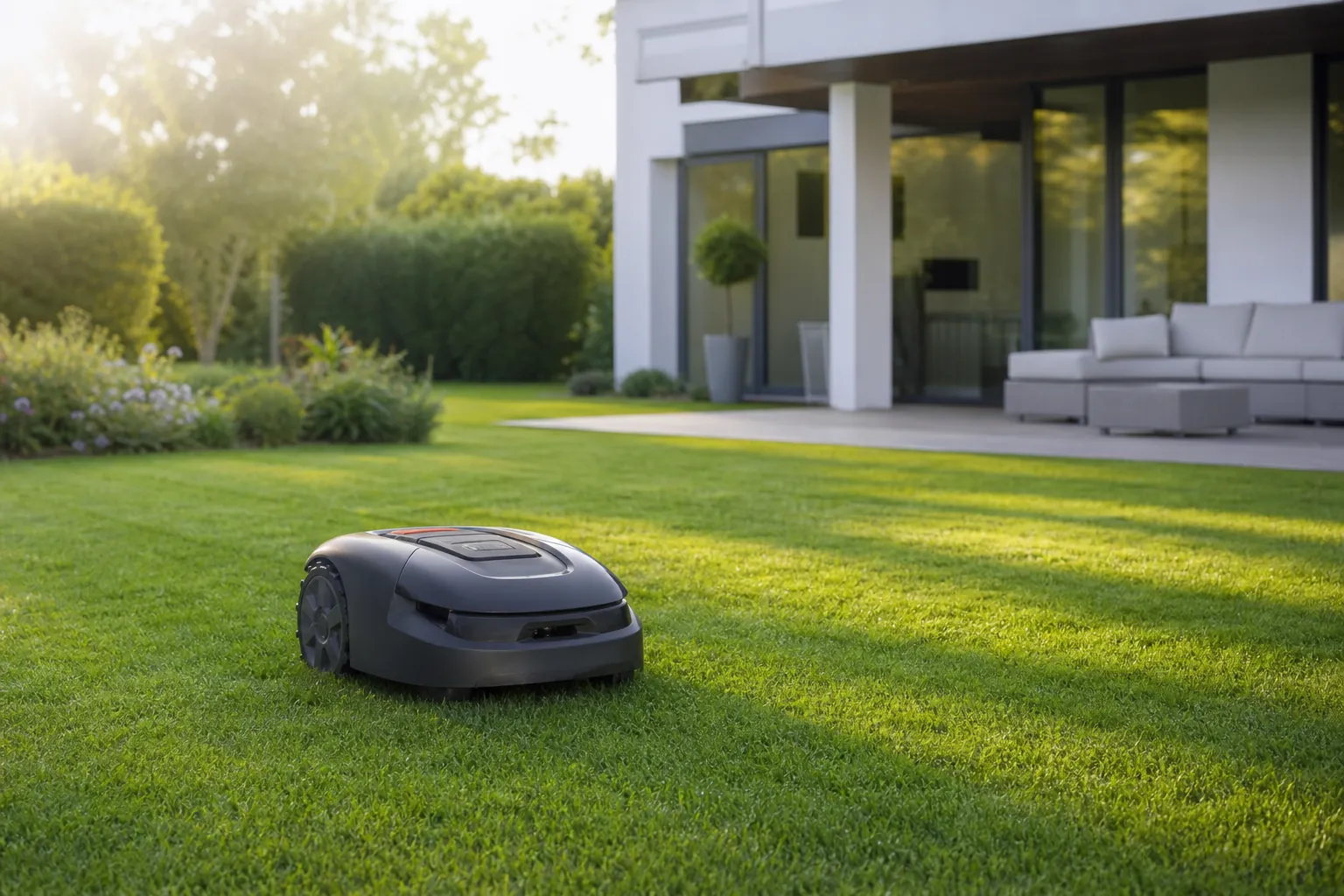
A robot lawn mower is most useful when it takes care of the routine mowing you already put off—not when it asks you to become a full-time groundskeeper for a new gadget. The right model can keep grass at a steady height with short, regular cuts. The wrong one can get confused by a narrow side yard, lose its way under dense trees, or leave you with a map that needs more attention than the lawn did.
Start with the yard, not the brand. Sketch the areas that need mowing, note slopes, gates, tree cover, garden beds, play equipment and the route to an outdoor power outlet. That small bit of planning makes it much easier to decide whether a robot mower is a good fit and which navigation approach will be dependable.
Quick answer: who should buy a robot lawn mower?
Robot lawn mowers suit homeowners with a defined, regularly maintained lawn who value time back more than a perfectly striped, once-a-week cut. They are especially appealing for mostly open lawns, recurring mowing routines and households that can leave the mower a clear route to its charging station. They are less appealing for properties with several disconnected grass areas, lots of exposed roots, loose debris, steep drop-offs or a lawn that regularly becomes overgrown.
Before you buy, be realistic about the finish. A robot mower handles the broad grass area; it does not replace edging along every fence, wall, bed or curb. Plan on a quick trim around boundaries when needed. That is still much less work than cutting the whole lawn with a push mower.
Measure the mowing area, not the whole property
A mower’s coverage rating refers to the grass it can maintain, not the size of the lot on a real-estate listing. Subtract the house, driveway, patios, sheds, mulch beds and areas you do not want it to enter. Then choose a capacity with breathing room rather than selecting the smallest rating that technically matches your lawn.
That margin matters because the mower will pause to recharge, slow down around obstacles and spend time reaching separate zones. A modestly larger rating is usually more useful than paying for an exotic feature you will not use. Lowe’s robot mower buying guide makes the same practical distinction: navigation and usable mowing area should be considered together, especially for larger, open lawns.
Choose navigation before comparing extra features
Navigation determines the setup work, the kinds of yards a mower can understand and the problems you may see later. There are three broad approaches, and none is automatically best for every property.
| Navigation | Good fit | Watch for |
|---|---|---|
| Boundary wire | Small or complex lawns where a physical edge is practical. | Installation time, broken-wire repairs and changes to beds or paths. |
| RTK satellite guidance | Open lawns where app-based zones and wire-free setup are appealing. | Clear-sky placement for the reference antenna and performance below heavy canopy. |
| Vision or sensor-led mapping | Yards with changing layouts where the model is designed for the local conditions. | How it handles low light, tall grass, leaves, shadows and repeated obstacles. |
Boundary-wire models
A boundary wire creates a physical signal around the mowing area. It takes effort to install, but it can be reassuring when the lawn has oddly shaped borders or satellite reception is poor. The trade-off is maintenance: aerating, edging, digging and landscape changes can damage or require moving the wire. Choose this approach when a durable fixed boundary sounds easier than managing a virtual map.
RTK and wire-free models
RTK systems use satellite positioning with a reference antenna to maintain a more precise virtual boundary. They can make zoning and seasonal changes far easier because the boundary lives in the app. They also need the right site conditions. The reference antenna usually needs a stable mounting point with a broad view of the sky, and the mower may be less reliable in areas surrounded by dense tree canopy or tall structures. Check the maker’s placement instructions before assuming a wire-free mower will be effortless.
Camera, lidar and sensor-led models
Some mowers rely heavily on on-board cameras, lidar or other sensors to recognize a lawn and avoid obstacles. These can be attractive where an antenna or boundary wire is inconvenient. The important question is not whether a product calls itself AI-powered. Ask what the mower does in shade, low light, tall grass, wet leaves and tight edges—the conditions that make ordinary yards messy.
Map the hard parts of the yard first
A simple rectangle is easy. The trouble spots decide whether the system will feel dependable: a narrow passage beside the house, a gate between front and back lawns, a low deck, exposed roots, a pond edge, a gravel strip or a sharp slope near a bed. Walk the yard as if you were a small wheeled machine. If you cannot imagine a clear, repeatable route, do not assume the mower will invent one.
Separate lawn zones deserve special attention. Some models can travel through a mapped corridor, while others need to be carried, sent through a gate or given a separate charging setup. A mower that works beautifully in the back yard may be a poor choice if the front lawn is divided by steps or a busy driveway.
Slopes, traction and lawn condition matter more than marketing photos
Compare the manufacturer’s stated slope limit with the steepest part of your actual mowing area, not the average grade of the yard. Leave a buffer for damp grass, loose soil and turns. A machine that can climb a hill in ideal conditions may still slip, mark the turf or lose traction after rain.
Also look down. Deep ruts, sprinkler heads, roots, low branches and uneven pavers create the kind of repeated obstacle that makes a mower stop or turn around. Fill holes, mark protected areas and remove loose sticks before the first run. A robot mower is a maintenance tool, not a brush cutter; start with grass that is already within the manufacturer’s recommended height.
Cutting quality comes from routine, not brute force
Robot mowers usually cut a small amount often and return fine clippings to the lawn. That can produce an even finish when the schedule matches the grass growth, but it is not the same as rescuing a lawn after two weeks of rain. During a fast-growth period, increase the schedule gradually and watch how the turf responds. During hot, dry spells, raise the cutting height and mow less aggressively to avoid stressing the lawn.
Adjustability matters more than a long list of modes. Look for a cutting-height range that suits your grass and an app or control that makes seasonal changes easy. Keep spare blades or the maker’s recommended cutting parts on hand. Dull or damaged blades tear grass rather than making a clean cut.
Safety is a routine, not a feature list
Lift, tilt and collision sensors are useful safeguards, but they do not make a spinning-blade machine something to run around children or pets. Schedule mowing for a time when the lawn is clear, inspect the area before it starts and return the mower to its dock when people or animals will be using the yard. Robomow’s safety guidance likewise advises keeping children and pets off the lawn while the machine operates.
Set clear no-go zones around ponds, drop-offs, play areas and anything the mower should never approach. Store the PIN, app login and recovery information somewhere safe. If theft protection or GPS tracking matters in your neighborhood, check exactly which features are included and whether they need a subscription or cellular connection.
Budget for the whole system, not just the mower
The price on the mower is only part of the decision. A wire model may need installation materials or professional help. A wire-free model may need an antenna mount, a reliable Wi-Fi signal near the dock or an optional cellular plan. Both may need replacement blades, occasional cleaning and a winter storage plan.
Ask each seller or installer the same questions: what is included, where will the dock sit, what happens if the map needs rebuilding, and who supports a navigation or charging issue after the first season? The best value is usually the system that your yard can support without workarounds.
Robot lawn mowers worth comparing
These are starting points for comparing the approach that fits your yard. Confirm the current coverage rating, slope limit, navigation requirements and regional availability on the live listing before buying.
- Boundary-wire robot lawn mowersView on Amazon ↗ can make sense for smaller lawns with a stable, defined perimeter.
- Wire-free RTK robot lawn mowersView on Amazon ↗ are worth comparing for open lawns where flexible app-based zones are valuable.
- All-wheel-drive robot lawn mowersView on Amazon ↗ are a category to consider when slopes and traction are the deciding constraint.
Set it up for a calm first week
- Prepare the lawn. Cut down overgrown grass, remove sticks and fill obvious holes before mapping.
- Place the dock carefully. Give it a level, accessible location with the clearance and power protection specified by the manufacturer.
- Build boundaries slowly. Make no-go zones generous around water, steps, beds and anything valuable.
- Supervise early runs. Watch the mower complete the routes that include narrow passages, slopes and the dock return.
- Tune one setting at a time. Adjust the schedule, height or map after observing a few runs—not all at once.
It is normal to make map corrections during the first week. The goal is not a clever-looking app map. The goal is a mowing routine that stays out of trouble and leaves the yard usable.
Frequently asked questions
Do robot lawn mowers work on uneven lawns?
They can work on mildly uneven lawns when the surface is firm and the model’s terrain and slope limits match the site. Large holes, exposed roots, loose gravel and sharp drop-offs should be corrected or excluded from the mowing map first.
Do I still need to edge the lawn?
Usually, yes. A robot mower covers the main grass area, but it cannot always reach the strip beside walls, fences, beds and curbs. Plan on a periodic trim for a finished edge.
Can a robot lawn mower run in the rain?
Weather tolerance varies by model. Some are designed to continue in light rain, while wet grass can reduce traction, create clumps and make slopes harder to manage. Follow the manufacturer’s guidance and pause the schedule when conditions make the yard unsafe or messy.
Are wire-free robot mowers better than boundary-wire mowers?
Not automatically. Wire-free models are convenient when the yard has a clear sky view and changing zones, while a boundary wire can be more predictable in heavily shaded or unusually shaped lawns. Choose the navigation system your property can support reliably.
The right robot mower should remove work, not create it
A robot lawn mower earns its place when it fits the lawn, the landscape and the way the household uses the yard. Start with the hard parts—boundaries, terrain, tree cover and safety—then compare the machines that can handle them. That approach is more reliable than buying the most advanced-looking mower and hoping the map works itself out.