Find the first place water would pool.
Look under the sink, beside the toilet, behind the washer, near the water heater, and at any appliance hose. A sensor on a dry shelf cannot warn you about a leak on the floor.
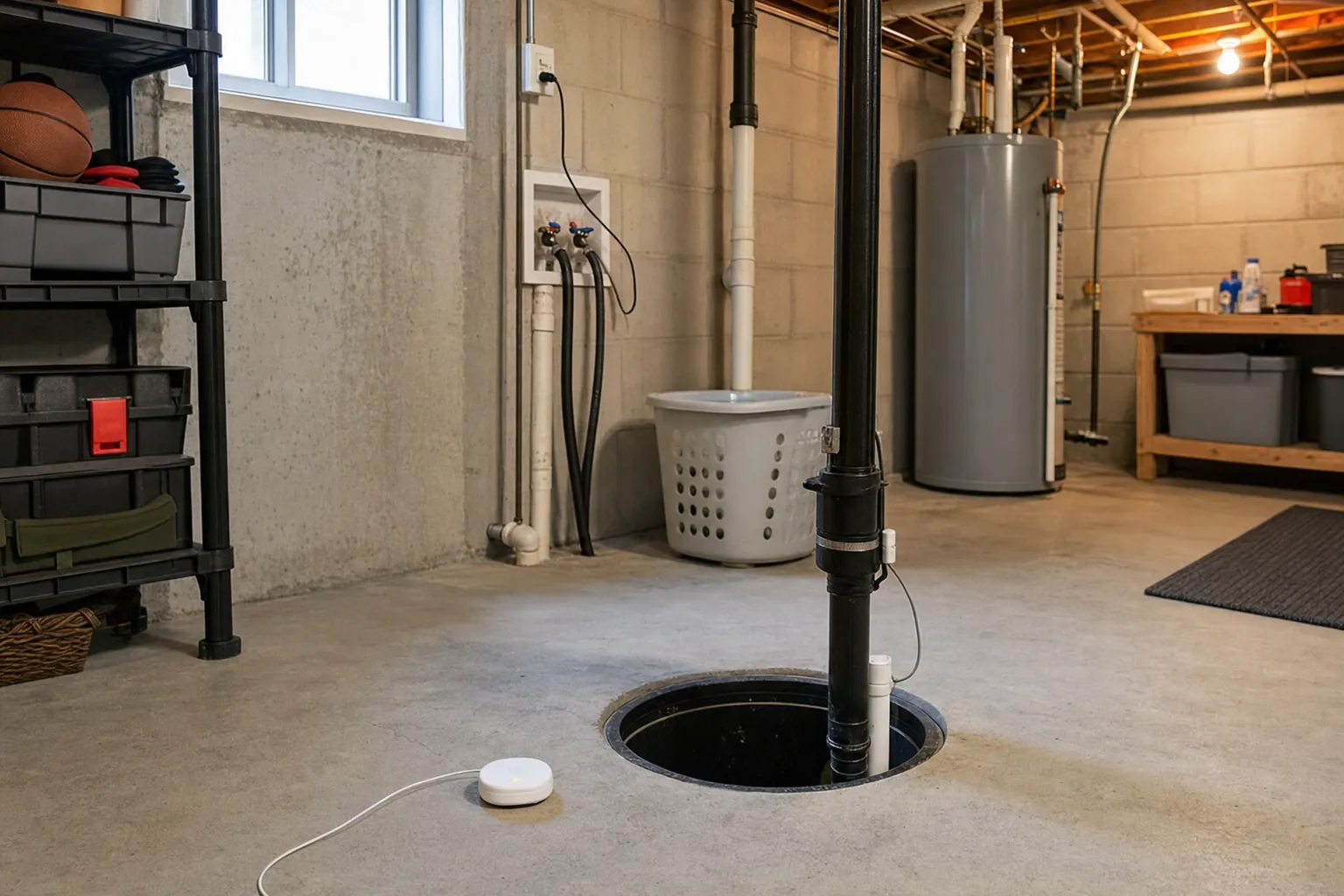
Water protection
Choose a leak detector that can warn you early, reach the risky spot, and fit the way your home or rental is actually used.
Start where water hides
A water sensor is most useful when it sits at the first place a slow drip, overflow, or failed hose would collect. Start with one exposed risk, then add coverage only where the home genuinely needs it.
Before you buy
Look under the sink, beside the toilet, behind the washer, near the water heater, and at any appliance hose. A sensor on a dry shelf cannot warn you about a leak on the floor.
A loud local alarm helps when someone is home. A phone alert helps when the space is empty. Make sure the alert reaches the person who can respond, not just the person who bought the sensor.
Know where to turn off the nearby appliance or fixture, who to call, and what your building expects after a leak. A detector gives you time, but the next step still matters.
Choose by the risk
The right detector is not always the most connected model. It is the one that fits the location, reaches the water, and gives a warning you will notice.
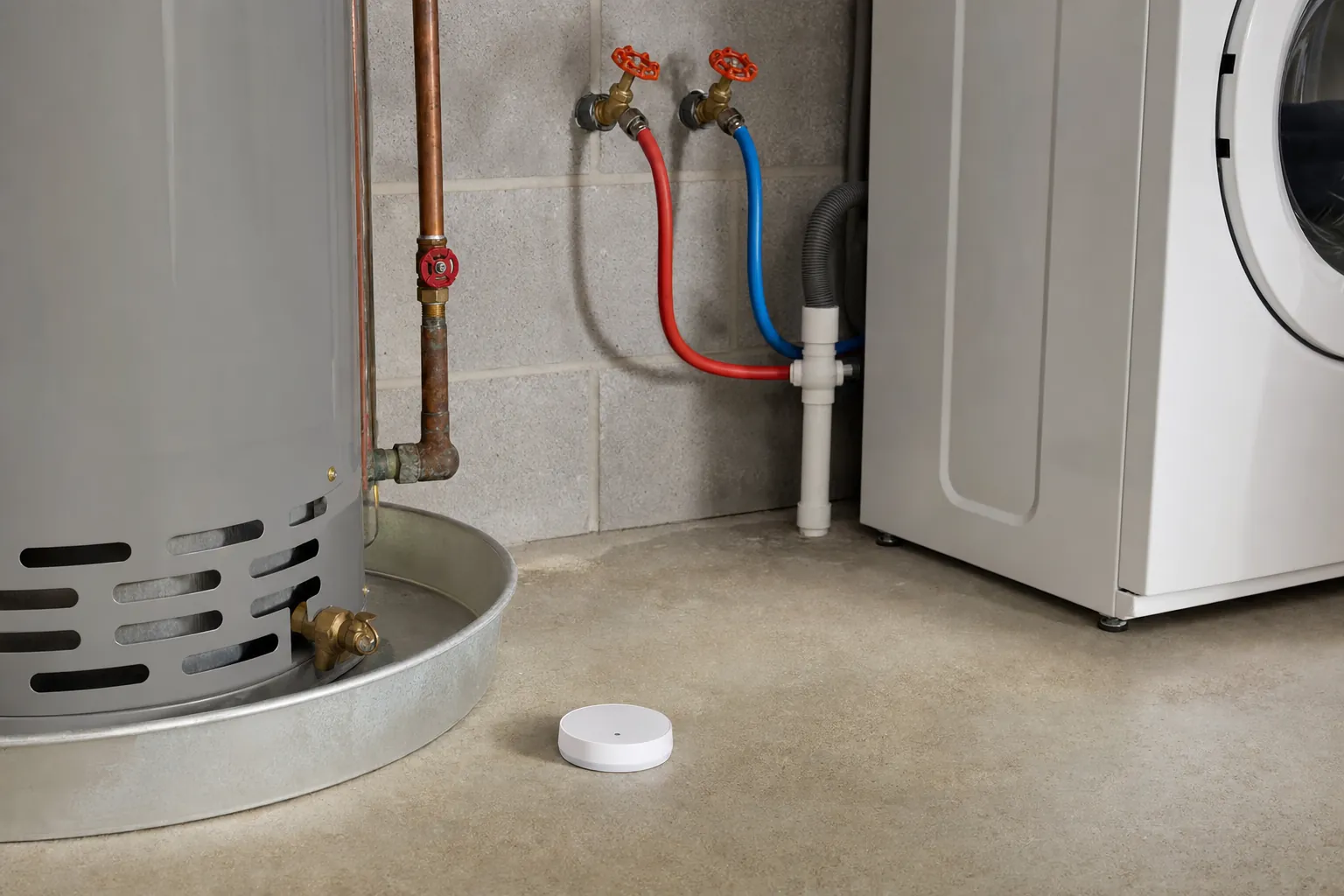
A loud battery-powered sensor is a practical choice when the goal is to hear water quickly near a toilet, water heater, washing machine, or utility sink. It has the fewest setup steps and still gives people at home a clear warning.
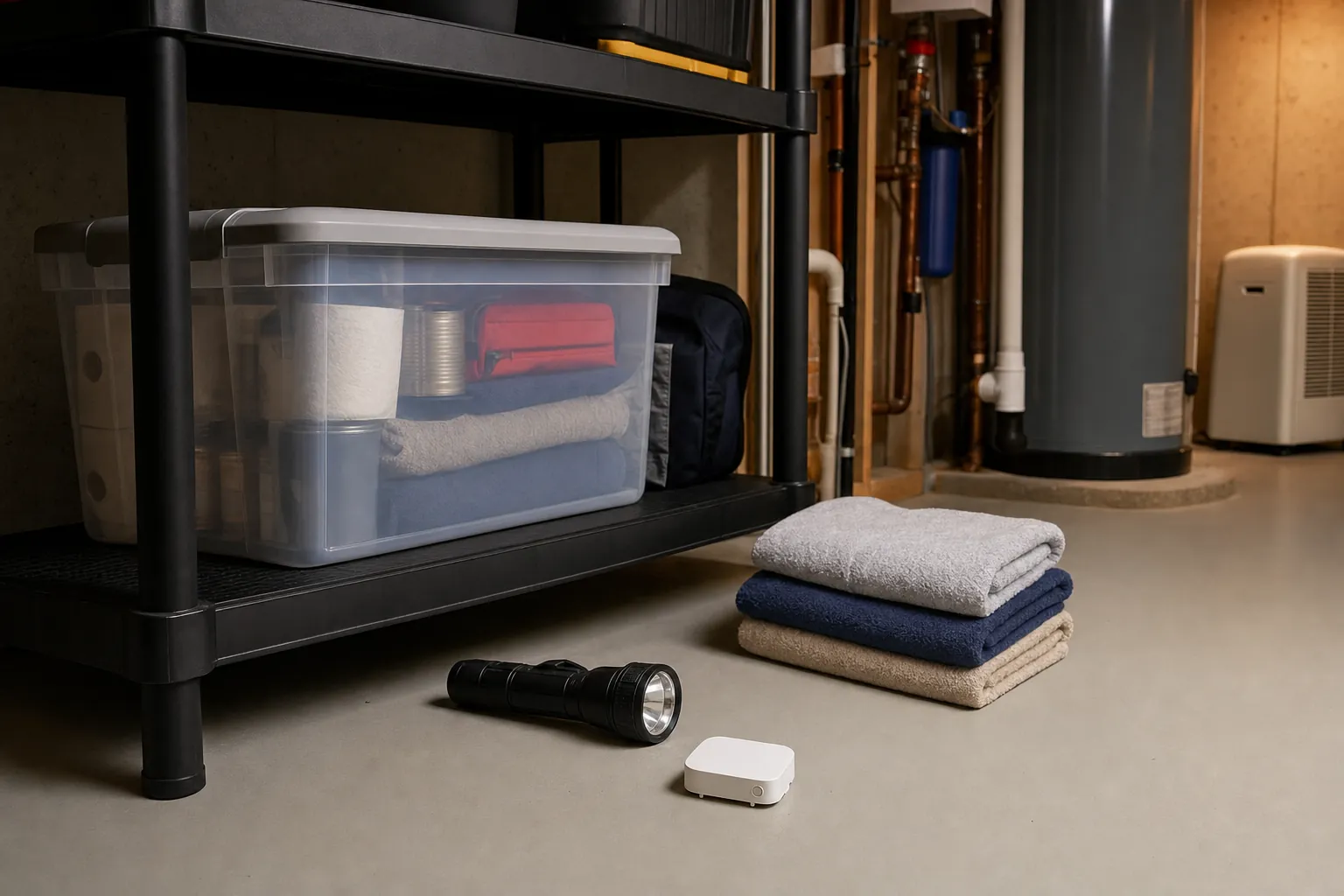
A connected sensor can send an alert when nobody is home, which is useful for a vacation, a second floor laundry area, or an apartment left empty during the workday. Confirm that the alert reaches the right phone before relying on it.
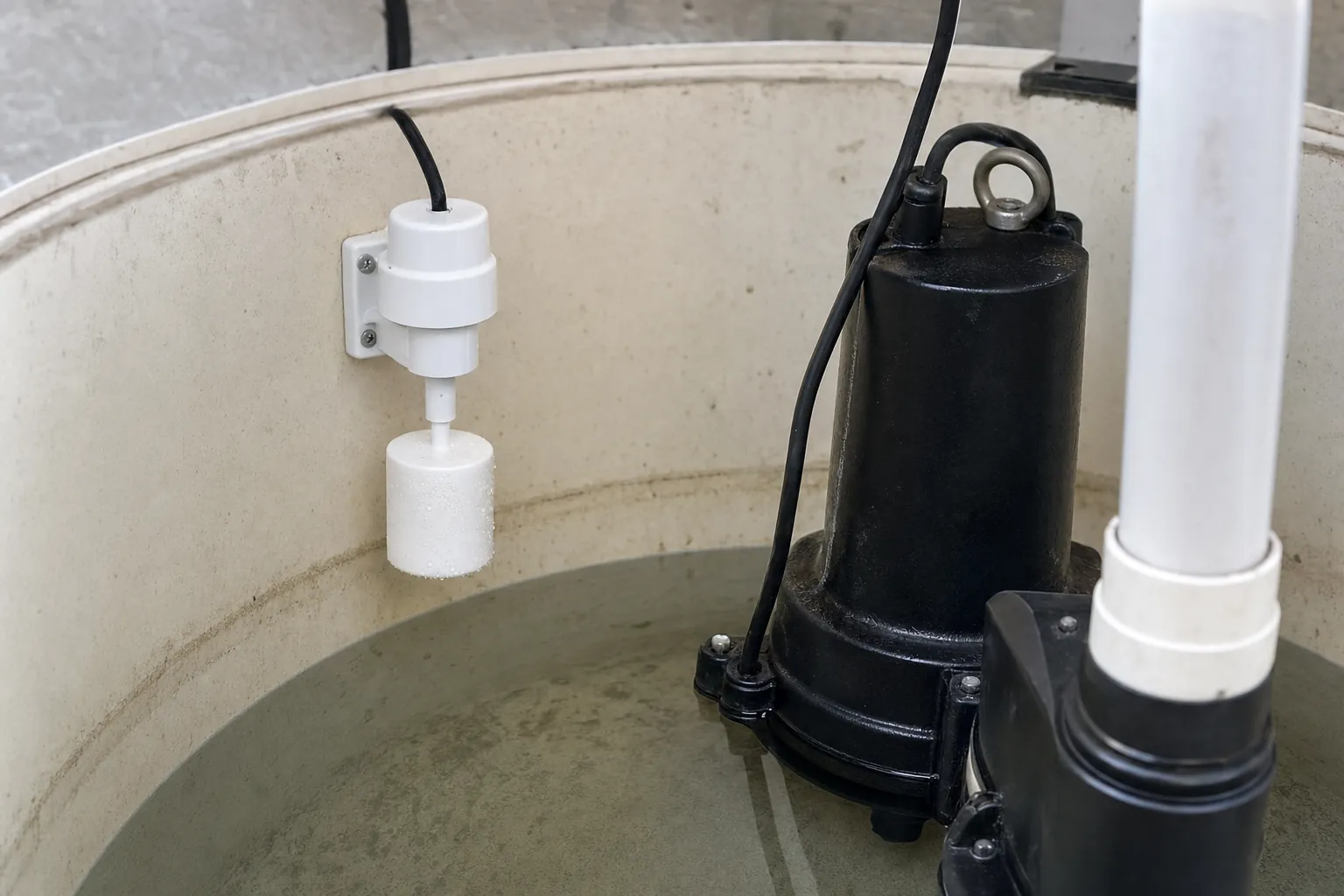
A cable probe can reach under an appliance, along a baseboard, or around a tight water line where a small puck cannot sit directly at the first place water would collect. It is useful when the risk is spread across a longer edge.
Place the sensor well
Washing machines, dishwashers, refrigerators with water lines, water heaters, humidifiers, and ice makers can all create a leak that starts small and stays hidden. Look for the lowest point under or beside the appliance, especially near supply hoses, drain connections, and fittings. Leave enough space to test the sensor and change its battery. A detector trapped behind a heavy appliance is easy to forget and hard to maintain when the alert matters.
Near a toilet, place a sensor where a failed seal, tank crack, or supply-line drip would reach it. Under a sink, keep it below the water connections rather than beside cleaning supplies. In a kitchen, do not put it where an ordinary splash or damp dish towel will set it off. The goal is early notice of water that should not be there, not another alert that gets ignored after a busy evening.
A puck-shaped sensor works well in a clear, small puddle zone. It is less useful when water could emerge anywhere along a long baseboard, below a broad appliance, or around several plumbing connections. A cable probe can follow that edge and give you more coverage without buying several separate sensors. Keep the cable clear of a door path, sharp edge, hot surface, or place where it could be pulled loose during normal cleaning.
Some connected sensors also report temperature. That can be useful near a utility room, exterior wall, crawlspace, or vacation property where a plumbing line could freeze before anyone sees a drip. It does not turn every sensor into a weather station. Check the model’s operating range, battery expectations, and notification settings, then put it in the part of the home where a cold warning would lead to a useful next step.
Choose the alert path
A loud siren can be the fastest and simplest warning when someone is home. Before depending on it, trigger the test mode and listen from the room where people usually are. A quiet alarm under a washer in a closed laundry room may not do much good. If the home is often occupied, a local alarm can be enough for a low-risk location. It also keeps working when the Wi-Fi network is having a bad day.
Connected sensors may use Wi-Fi, a hub, or another low-power network. Check the actual signal where the sensor will live, not only near the router. A basement, cabinet, utility closet, or far bedroom can have weaker coverage than the rest of the home. Follow the setup prompts, name the sensor by its location, and test an alert while your phone is on cellular data. The label should tell you exactly where to look, such as "under kitchen sink" rather than a generic device name.
A battery sensor needs a simple maintenance habit. Turn on low-battery alerts where available, write down the battery type, and replace it before a long trip rather than after the first warning. Connected models may also tell you when they lose contact with a hub or network. Treat that notice as a reason to check the sensor, not as a harmless app message. A detector that is powered but offline may not give the remote warning you expect.
For a household, one trusted person may need the alert while another has the building contact or access to the unit. Add only the people who can help respond, and remove old roommates or former property contacts when they no longer need access. Use a strong account password and available account protection. A water sensor is a simple device, but the account receiving its alerts should be treated like the rest of the smart home.
When you rent
Build a useful response
Use the manufacturer’s test button or a small amount of water on the contacts, then confirm the local siren and phone notification both work. Dry the sensor after testing, and make sure it returns to its normal ready state. This is also a good time to check that a cabinet door, storage bin, or moved appliance has not shifted the sensor away from the area it needs to cover.
A person at home may be able to turn off the washing machine, dishwasher, sink fixture, or toilet supply when it is safe to do so. Do not guess around electrical outlets, standing water near an appliance, or a leak that seems to come from a wall, ceiling, or shared building line. In those cases, step away from the area and contact the appropriate maintenance or emergency support. A fast alert is helpful because it gives you a chance to make that call sooner.
A leak detector works best alongside a reliable home network and a small number of alerts the household takes seriously. If you are adding several connected sensors, review how they join Wi-Fi and keep their access deliberate. SavvyNests’ router isolation guide can help you make sensible boundaries for connected devices, while the basement and bathroom leak detector guide goes deeper on high-risk locations.
Frequently asked questions
Start beside the water heater, washing machine, dishwasher, refrigerator line, toilet, under-sink plumbing, and any basement or utility area where water could collect unnoticed. Put the sensor where the first small amount of water would reach it, not where a larger puddle would eventually spread.
A basic alarm does not need Wi-Fi. A connected sensor uses Wi-Fi, a hub, or another supported connection to send alerts away from home. Check the exact connection method and test the notification on your phone before you depend on it.
Yes. A battery-powered sensor can usually sit on the floor with no permanent installation and can help a renter notice a leak from an appliance, toilet, or under-sink line. A sensor does not replace a maintenance request or approval for plumbing work, but it can help you spot a problem earlier.
Most leak detectors only sound an alarm or send an alert. An automatic shutoff system is a different product that closes a water valve when it detects a problem. It can require access to the main water line and should be discussed with the property manager in a rental.
Follow the manufacturer’s test instructions, then place a small amount of water on the sensor contacts or probe. Confirm the local alarm is loud enough to hear and that every intended phone receives a clear alert. Dry the sensor fully and repeat the test after replacing batteries or changing Wi-Fi.
Protect the places that leak first
AI Smart Home Finder
Start with comfort you can measure.
Explore thermostats, lighting and routines that can make a daily difference.