Imagine you’ve finally found the perfect sleeping position, only to realize the kitchen light is still on or the front door is unlocked. It’s a frustrating moment that forces you out of your cozy cocoon and ruins your relaxation. We all know the struggle of a jarring alarm clock that feels like a physical attack or a bedroom that suddenly feels like a sauna at 3:00 AM. These small daily frictions can seriously impact your rest and make your mornings feel like an uphill battle.
The good news is that technology has evolved to become invisible and supportive rather than distracting. You can reclaim your rest by using the right smart home ideas for bedroom to create a space that works for you, not against you. This guide will show you how to turn your room into a frictionless sanctuary with easy to use devices that improve sleep quality and simplify your routine. We’ll explore 15 practical ways to automate your environment, from gentle wake-up lighting to climate-controlled mattresses that help you drift off effortlessly while saving energy.
Key Takeaways
- Learn how to transform your sleeping space into an automated ecosystem that optimizes your biology and eliminates bedtime friction.
- Explore practical smart home ideas for bedroom lighting that use tunable white light and motorized blinds to mimic natural sunrise and sunset.
- Discover how to use automated climate controls and window sensors to maintain the perfect sleeping temperature all night long.
- Evaluate the latest smart beds and hidden tracking technology to monitor your sleep quality without having to wear a watch to bed.
- Build a customized morning sequence that uses gradual light and sound to wake you up gently and feeling refreshed.
Table of Contents
Why Your Bedroom Needs a “Brain”: The Benefits of Automation
Your bedroom is the most personal space in your home. Turning it into a “smart” room isn’t about adding complexity; it’s about removing the daily friction that keeps you awake. Think of a smart bedroom as a biological optimization ecosystem. Instead of you adapting to your environment, your environment adapts to you. By integrating a home automation system, you create a space where everything from the air quality to the light temperature supports your natural sleep cycles.
We’ve all been there. You’re finally comfortable, but the hall light is on or the front door is unlocked. Frictionless living means these small annoyances disappear. In 2026, the trend has shifted from manual app control to invisible, sensor-based automation. You don’t want to open an app to dim the lights; you want the room to “know” it’s 10:00 PM and begin the transition for you. This shift toward autonomy allows you to focus on resting rather than managing gadgets.
Privacy is a valid concern for anyone adding tech to their private sanctum. Modern devices now frequently feature physical privacy shutters or process data locally so your information never leaves your home. To combat blue light, smart bulbs can be programmed to automatically strip out stimulating blue frequencies after sunset, bathing your room in warm, sleep-inducing amber tones that protect your melatonin production.
The Science of Smart Sleep
Your body relies on external cues like light and temperature to signal it’s time for rest. Smart tech masters these cues. When your smart home ideas for bedroom include automated routines, your brain begins to associate specific light levels with sleep. A “one-tap” bedtime routine can turn off the house, lock the doors, and cool the room, which significantly reduces pre-sleep anxiety. Since the room handles the details, you won’t feel the urge to check your phone, effectively removing the biggest sleep disruptor from your night.
DIY vs. Professional Installation
You don’t need a professional contractor to build a smart sanctuary. Most upgrades in 2026 are simple plug-and-play solutions. Brands now use universal standards to ensure your devices talk to each other through a central hub without a technical headache. If you’re feeling overwhelmed, start small. A single smart bulb or a smart plug for your existing bedside lamp can make a massive difference. You can always add more layers as you get comfortable with the technology, growing your smart home ideas for bedroom at your own pace.
Smart Lighting Ideas for a Better Sleep Cycle
Lighting is the most powerful external cue for your internal clock. When you implement smart home ideas for bedroom lighting, you aren’t just changing the decor; you’re taking control of your biology. Modern tunable bulbs can mimic the natural progression of the sun, shifting from crisp, energizing light at noon to a soft, amber glow as the day fades. This transition signals to your brain that it’s time to start producing melatonin, the hormone responsible for sleep. By automating this process, you remove the need to remember to dim the lights yourself.
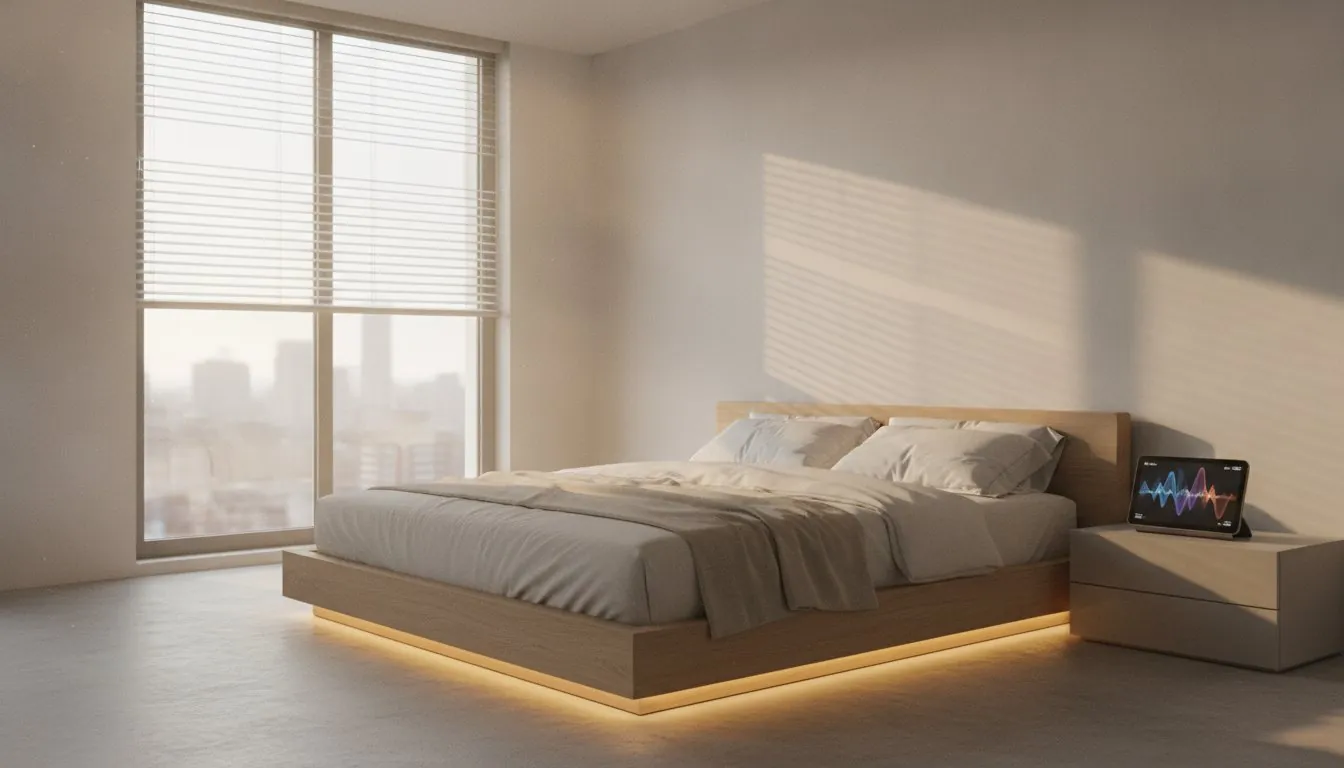
Safety and convenience also play a major role in a smart setup. Under-bed motion lighting is a game-changer for those midnight trips to the bathroom or kitchen. Instead of fumbling for a blinding overhead switch, a low-profile LED strip under the bed frame can detect your feet hitting the floor. It casts a gentle, dim glow across the floorboards that provides just enough light to see without fully waking you up or disturbing your partner. These subtle additions are becoming common tech features in homes because they solve real, everyday problems with minimal effort.
You can even use light as a silent communicator. Color-coded notifications allow your room to speak to you without making a sound. A subtle pulse of green light on your bedside lamp can indicate that your security system is armed, while a soft blue fade might let you know your morning coffee is ready. This reduces the need to check your phone screen, which is one of the primary sources of sleep-disrupting blue light.
Circadian Lighting Setup
Circadian lighting is technology that aligns with your internal clock. To get the best results, set a “Wind Down” scene to trigger automatically 30 minutes before your scheduled bedtime. This scene should gradually strip away blue light frequencies and lower the brightness to around 20 percent. In the morning, program a “Sunrise” scene that slowly increases in intensity over 20 minutes. This gentle transition helps you wake up naturally, leaving you feeling much more refreshed than a jarring audio alarm ever could.
Smart Blinds and Natural Wake-Ups
Automated window treatments are the perfect partner for smart bulbs. You can choose between full motorized shades or budget-friendly retrofit kits that attach to your existing blinds. Scheduling your blinds to close at sunset provides instant privacy and adds a layer of insulation to keep your room cozy. In the morning, they can open just a crack to let in the first rays of dawn. If you’re unsure which system will work best with your current setup, check out The Ultimate Smart Home Buying Guide: Build Your Savvy Nest in 2026 to help you choose a compatible ecosystem that fits your lifestyle.
Climate and Sound: Creating the Perfect Sleep Environment
While lighting sets the stage, the climate and sound of your room determine how long you stay in deep sleep. Your body’s core temperature naturally drops as you prepare for rest, and a room that stays too warm can interrupt this biological process. By incorporating climate-focused smart home ideas for bedroom, you can ensure your environment stays perfectly synced with your internal thermostat throughout the night. It’s about creating a space that breathes with you.
Smart fans and window sensors offer a brilliant, low-cost way to manage airflow without touching a dial. You can set a simple automation: if the bedroom window sensor is closed and the room temperature rises above a certain point, your smart fan kicks in automatically. This prevents you from waking up in a sweat at 2:00 AM. For a truly immersive experience, smart diffusers can be timed to release calming scents like lavender or cedarwood as you begin your evening wind-down, signaling to your brain that the day is officially over.
The soundscape of your room is just as vital. The latest evolution in smart white noise doesn’t just play a static loop; it uses microphones to listen for disruptive sounds like a passing car or a barking dog. When a spike in noise is detected, the device subtly adjusts its volume or frequency to mask the intrusion, keeping you in a state of rest. These small, automated adjustments make the difference between a restless night and a restorative one.
Temperature Regulation for Deep Sleep
Research consistently shows that the optimal sleep temperature for most adults is approximately 65°F (18°C). You don’t need a professional HVAC overhaul to achieve this. A savvy way to manage your climate is by using smart plugs. By connecting a standard floor fan or an older space heater to a smart plug paired with a room sensor, you can maintain a precise temperature on a budget. If you share a bed with someone who has different temperature preferences, dual-zone smart bedding allows each side of the bed to be cooled or warmed independently, ending the “thermostat wars” for good.
Soundscapes and Silent Environments
A truly smart bedroom knows when to be quiet. You can program a “Goodnight” routine that mutes all smart speakers and suppresses phone notifications with a single command. This ensures your sleep isn’t interrupted by a random news alert or a late-night email. If you struggle to shut off your mind, many smart speakers now act as gentle narrators, offering sleep stories or guided meditations specifically designed for adults. These routines help you transition from the noise of the day into the silence of the night without any extra effort.
Next-Level Comfort: Smart Beds and Hidden Tech
Your bed shouldn’t just be a place to lie down; it should be the command center for your recovery. When exploring smart home ideas for bedroom, the most impactful upgrades often happen right where you sleep. You have two main paths: investing in a full smart mattress or opting for a smart mattress cover. High-end models like the Tempur-Pedic TEMPUR-ActiveBreeze provide ultimate climate control, while the Saatva Solaire offers a more affordable entry point with 50 firmness settings. A smart cover is often the savvier choice if you already love your current mattress but want to add features like dual-zone cooling or sleep tracking without the five-figure price tag.
Clutter is the enemy of a calm mind. In 2026, we’re seeing a rise in smart furniture that hides the “tech” part of the smart home. Nightstands now come with integrated wireless charging pads and hidden hubs that coordinate your devices without a tangle of wires. This keeps your sanctuary looking like a bedroom rather than a server room. Integrating these hidden elements allows you to maintain a minimalist aesthetic while enjoying maximum functionality.
If you’re ready to upgrade your sleep surface, read our latest Smart Device Reviews to find the perfect fit for your budget and comfort needs.
Sleep Tracking Without Wearables
Many people find wearing a watch to bed restrictive or uncomfortable. Under-mattress trackers solve this by monitoring your heart rate, respiration, and sleep stages through the mattress. This invisible data collection can trigger your whole-house routine. Imagine your blinds opening and your coffee maker starting the moment the sensor detects you’ve actually stepped out of bed. It’s a seamless way to use data to improve your life without ever having to remember to charge a wearable device.
The Anti-Snore Revolution
Snoring is a leading cause of bedroom friction for couples. Smart beds now feature microphones that listen for the specific frequencies of snoring. When detected, the bed gently raises the head of the mattress by a few degrees to open the sleeper’s airway, often without waking them up. This small adjustment can significantly improve the partner’s sleep quality and overall bedroom harmony. Smart bedding is the bridge between furniture and health tech. It preserves the peace of the room while actively monitoring the health of everyone in it.
The Perfect Wake-Up Sequence: Morning Automation Tips
A great morning doesn’t start with a loud buzzer that leaves you feeling disoriented. Instead, it begins with a choreographed sequence that gently transitions your body from deep sleep to full alertness. By layering the smart home ideas for bedroom we’ve discussed, you can create a customized roadmap for your morning. This isn’t just about waking up; it’s about waking up with intent and energy.
To build the ultimate routine, follow this five-step automated sequence:
- Step 1: The Sunrise Fade. About 20 minutes before your actual alarm, your smart bulbs should begin a slow transition from deep amber to bright, cool white. This suppresses melatonin and prepares your brain to wake up naturally.
- Step 2: The Gentle Nudge. At your designated wake time, your smart speaker should play nature sounds or your favorite acoustic playlist, starting at five percent volume and gradually increasing to 30 percent.
- Step 3: The Climate Kickstart. It’s hard to leave a warm bed for a cold room. Program your smart thermostat to raise the temperature to 70°F (21°C) 15 minutes before you wake up, making the transition out of the covers much more inviting.
- Step 4: The Information Brief. Once your sensors detect you’ve stood up, your room can automatically read out the weather, your first calendar appointment, and a quick news summary.
- Step 5: The Kitchen Hand-off. As you walk toward the door, your bedroom “hands off” the routine to the rest of the house, triggering the smart coffee maker to start and the kitchen lights to turn on.
Fixing the Snooze Habit
The snooze button is a trap that leads to sleep inertia. Automation removes this temptation by changing your environment so staying in bed feels less appealing. If you struggle to get moving, set a “no-snooze” rule in your automation app. If the alarm is dismissed but a motion sensor doesn’t detect you leaving the bed within two minutes, the bedroom lights can jump to 100 percent brightness. You can even program the hallway lights to turn on, effectively “pulling” you toward the shower and the start of your day.
Voice vs. Sensor Triggers
Choosing how to trigger your routine depends on your lifestyle. Voice commands like “Hey Google, I’m awake” are reliable, but they can disturb a partner who is still sleeping. For a truly frictionless experience, use a floor pressure mat or an under-mattress sensor. These “silent” triggers start your sequence the moment your feet hit the floorboards. If you prefer manual control without the noise, place a smart button on your nightstand. One tap can start your briefing and coffee, giving you total control without saying a word.
Start Your Journey Toward Frictionless Sleep
Transforming your bedroom into a high-performance recovery zone doesn’t require a massive budget or a professional contractor. You can start with simple, DIY-friendly upgrades like tunable bulbs or a plug-and-play white noise machine. These smart home ideas for bedroom optimization are designed to work silently behind the scenes, aligning your environment with your body’s natural rhythms. Whether you’re looking for rental-friendly, no-drill solutions or advanced sleep tracking, the focus is always on removing friction from your life.
You’ve seen how lighting, climate, and sound can work together to create a seamless wake-up experience. Now it’s time to take that first step toward better health and more energetic mornings. Our expert-curated resources focus on practical tech that delivers real-world value without the tech-induced stress. Explore more smart home buying guides at SavvyNests to find the specific devices that fit your space and your budget. You deserve a bedroom that takes care of you. Start small tonight and feel the difference tomorrow.
Frequently Asked Questions
Is it safe to have smart devices in the bedroom near my head?
Yes, smart devices are safe for bedroom use and must adhere to strict regulatory standards. As of 2026, most devices sold in major markets meet new cybersecurity rules, such as the Australian Cyber Security Rules 2025, which ensure they’re secure by design. These gadgets use low-power radio frequencies similar to standard Wi-Fi, which are considered safe for residential environments by health authorities.
Do smart lights really help you wake up better than a phone alarm?
Smart lights are significantly more effective because they support your body’s natural chemistry. By mimicking a sunrise, these bulbs trigger your brain to stop producing melatonin and start releasing cortisol. This biological transition helps you wake up feeling refreshed and alert. A phone alarm often causes a “startle response,” while light provides a gentle nudge that aligns with your internal clock.
How much does it cost to start a basic smart bedroom setup?
Can I make my bedroom smart if I am renting an apartment?
Absolutely, because most modern smart home ideas for bedroom optimization are completely non-permanent. You can use plug-in bulbs, smart plugs for your fans, and retrofit kits like the SwitchBot Blind Tilt, which costs current retailer pricing and attaches to your existing blinds. These devices don’t require any drilling or wiring changes, so you can simply pack them up and take them with you when your lease ends.
What is the best smart hub for a bedroom-focused setup?
The best hub is often the one that matches your current phone or tablet ecosystem, but Matter compatibility is the most important feature to look for in 2026. If you want to keep things simple, many bulbs from LIFX and WiZ connect directly to your Wi-Fi and don’t require a separate hub at all. For those who want advanced automation, an Amazon Echo or Apple HomePod serves as an excellent central controller.
Do smart bedroom devices work if the internet goes out?
Many devices continue to work through local control even without an active internet connection. Systems that use a Zigbee mesh network, such as the Philips Hue starter kit, will still run your pre-set schedules and respond to physical smart switches. However, you’ll typically lose the ability to use voice commands or control the devices through your phone app until the connection is restored.
How do I prevent smart devices from glowing and keeping me awake?
You can easily manage light pollution through the device’s companion app. Most smart speakers and hubs have a “night mode” that dims or completely shuts off status lights and clocks during specific hours. If you have a device with a small LED that can’t be turned off via software, a tiny piece of light-blocking tape is a quick and effective way to ensure your room stays dark.
Can smart bedroom tech help with snoring or sleep apnea?
Smart beds can actively help with common snoring by automatically adjusting your sleeping position. When a bed like the Tempur-Pedic TEMPUR-ActiveBreeze detects snoring, it gently raises the head of the mattress to help open your airway. While this tech significantly improves sleep quality for many, it’s not a medical device. You should always consult a healthcare professional for serious conditions like sleep apnea.
Article by
Michael J. Mahon
I research and compare smart-home products for homeowners and renters, focusing on practical setup, compatibility, affordability, and everyday usefulness.