Read the unit's electrical label.
Find the air conditioner's amperage or wattage and compare it with the smart plug's stated limit. Do not choose by the plug's shape, a retailer review, or the size of the room alone.

Cooling control
A smart plug can make a compatible window unit easier to schedule. It can also be the wrong way to control an air conditioner. Check the load, restart behavior, and outlet before you buy.
Start with the appliance
The question is not whether the plug fits. It is whether the air conditioner, outlet, and routine can support it. A quick check now can prevent an unreliable schedule, a warm room, or a purchase you should not use.
Before you buy
Find the air conditioner's amperage or wattage and compare it with the smart plug's stated limit. Do not choose by the plug's shape, a retailer review, or the size of the room alone.
Turn the unit off at the wall only when its manual permits it, then restore power. If it returns to standby instead of cooling, a smart plug cannot create the routine you want.
Use a good wall outlet, not a power strip or extension cord. The plug should remain visible and reachable so you can check it, reset it, and disconnect it when needed.
Choose the right control
A plug is useful for a narrow set of compatible units. When you need temperature control, a smoother restart, or a better view of the room, another option may make more sense.

This can be the best match for a smart plug when the air conditioner is within the plug's stated electrical limit and restarts cooling on its own after power is restored. The plug controls power, not the temperature setting, so the unit must be left in a cooling-ready state.
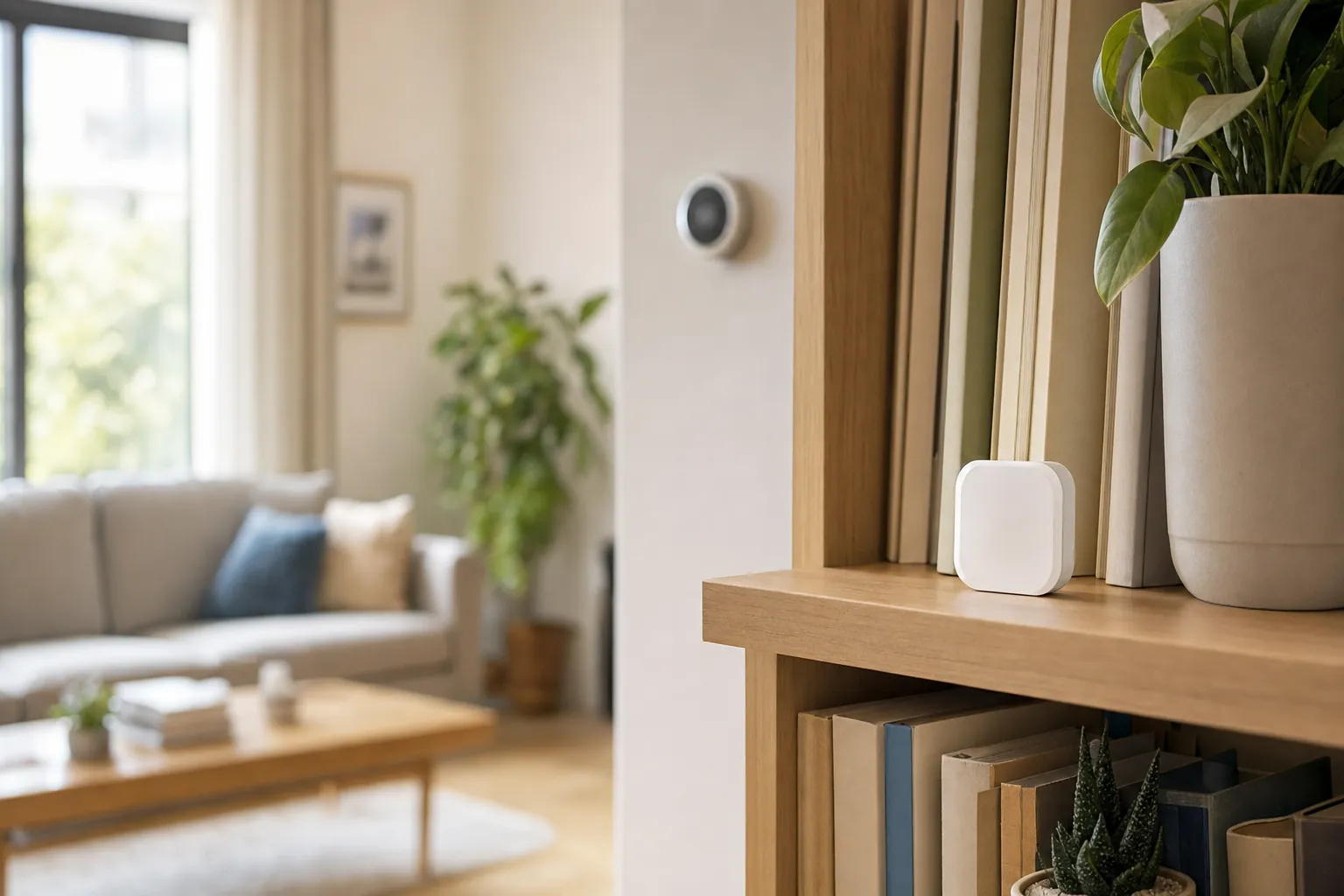
An infrared controller can be a better fit when you want to change temperature, mode, or fan speed from an app. It sends the same type of signal as the unit's remote rather than repeatedly cutting power to the air conditioner.
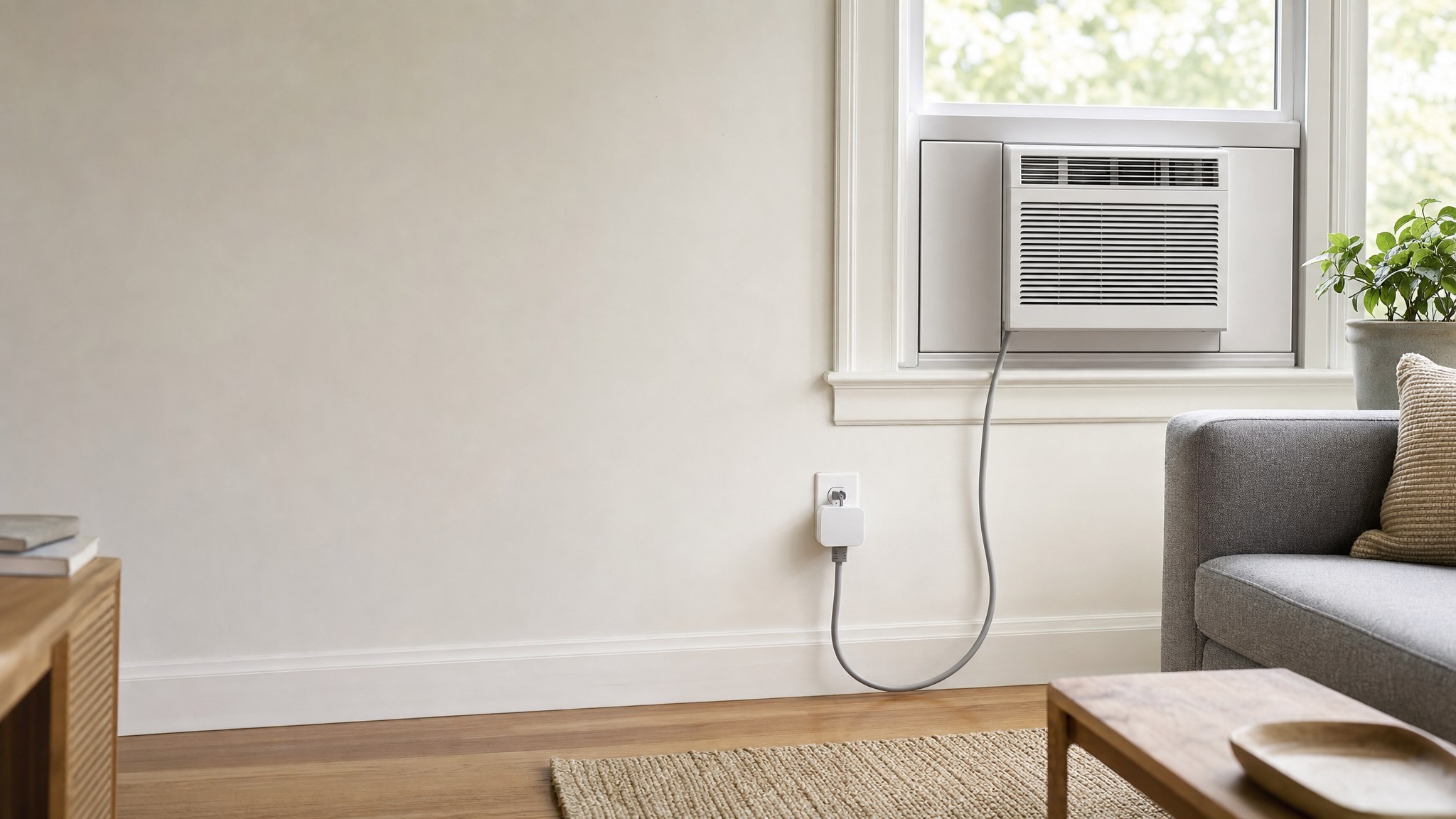
Start with the unit's manual and electrical label. Many portable and larger units draw more power, use a dedicated outlet, or have controls that do not restart after an outage. A smart plug may not be appropriate, even when the connector physically fits.
Match the power
Look for the electrical information on the air conditioner, usually near the power cord or in the manual. Then read the smart plug's instructions for the type of load it supports. If the unit draws more than the plug allows, requires a dedicated circuit, or is not listed as a suitable use, stop there. The answer is not to add an adapter or use a heavier-looking power strip.
An air conditioner may delay a restart to protect its compressor after power is interrupted. That is normal behavior, but it means a plug schedule may not cool the room at the exact minute you expect. Avoid building a routine that repeatedly cuts and restores power in short intervals. Give the unit time to complete its normal restart cycle and follow its manual when the behavior is unclear.
When the plug turns on, it only restores electricity. It cannot lower the set temperature, choose dry mode, change fan speed, or close the window. For this to work, the air conditioner must already be set to a cooling mode that resumes on its own. A unit that waits for a button press is better controlled through its remote, a compatible infrared controller, or a simple manual routine.
Warm plugs, discoloration, a loose outlet, a damaged cord, repeated breaker trips, or a burning smell are not settings problems. Disconnect the setup and have the outlet or appliance checked. Smart-home gear should make a room easier to manage, not add another electrical question to ignore.
Use a schedule well
A compatible bedroom unit might turn on shortly before bedtime and turn off after the room has cooled. A home office unit may only need to run during work hours. Start with one schedule for the room's real use, then live with it for a few days. It is easier to trust a single dependable routine than a stack of rules that nobody remembers to check.
A plug with energy monitoring can show how long a compatible unit actually runs. That information is useful when you are choosing between a shorter cooling window, a warmer set point, better shades, or a fan to move air through the room. It is not a reason to run the air conditioner longer just because the app makes the data easy to watch.
Everyone in the home should still know how to use the air conditioner directly. Keep the remote available, leave the outlet reachable, and make sure the unit can be turned off without an app. That matters during a Wi-Fi outage, when a guest is staying over, or when the room is uncomfortable and a quick adjustment is all you need.
Sun through a west-facing window, a blocked vent, a loose window panel, or warm air leaking around the unit can make a room feel like it needs a smarter device. Check those basics first. A room sensor can help you see when the problem happens, while the smart temperature sensor guide explains how to place one where the reading is actually useful.
Apartment and rental check
Plan the next step
A smart plug is not a control for central air conditioning. If your home has a compatible central system, a thermostat can create schedules without interrupting power at the appliance. SavvyNests' condo thermostat guide covers the equipment and building checks that matter before you replace one.
When one room is always warmer than the rest of the home, a sensor can show whether the pattern follows sun, time of day, or a cooling cycle. That gives you a more useful starting point than guessing at a device setting from another room.
Smart-home control is useful when it removes a repeated task without hiding the basics. Visit the smart-home automation guide for practical ideas that work alongside ordinary controls, clear routines, and the devices you already own.
Frequently asked questions
Sometimes. First compare the air conditioner's electrical label and manual with the smart plug's stated rating. The plug must be rated for the load, the outlet should be in good condition, and the air conditioner needs to resume cooling after power is restored. If any part is unclear, use a different control method or ask a qualified electrician.
A smart plug only turns power on and off. Many air conditioners return to standby after an outage and need a button press or remote command before they begin cooling again. Others have electronic controls, compressor protection, or installation requirements that make repeated plug-level power control a poor fit.
It can help you avoid running a compatible unit when a room is empty or after a planned cooling period ends. It does not make an air conditioner more efficient on its own. The useful saving comes from a schedule that matches the room and from avoiding unnecessary cooling.
No. Air conditioners should be plugged directly into a properly grounded wall outlet unless the manufacturer specifically says otherwise. A smart plug only belongs in the setup when its instructions and electrical rating clearly support that use.
For a remote-controlled window unit, an infrared air-conditioner controller can adjust the same settings as the remote. For central air, a compatible smart thermostat is usually the better control. A room temperature sensor can also help identify whether the real problem is cooling capacity, sunlight, airflow, or an inaccurate thermostat location.
Choose carefully
AI Smart Home Finder
Start with comfort you can measure.
Explore thermostats, lighting and routines that can make a daily difference.