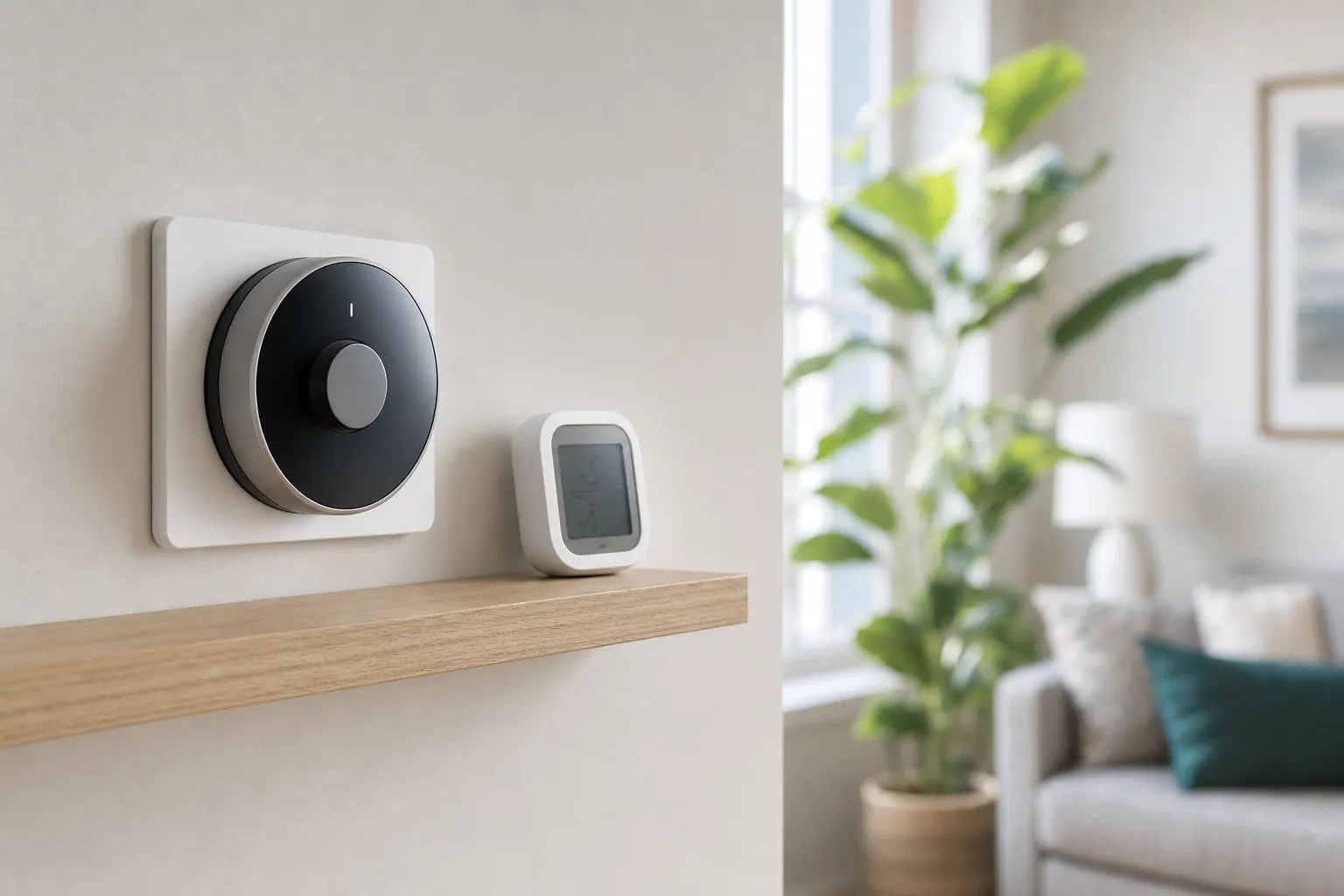
A thermostat controlling a comfortable room

Electric-baseboard comfort

Smart Thermostat for Electric Baseboard Heat: What to Check

Choose a control that matches the electric circuit first, then use simple schedules to make each room more comfortable to live in.

Start with the circuit

Electric baseboard heat needs a thermostat made for the way the heaters are powered.

The smartest first move is to identify the heat, the voltage, and the total load before comparing an app, voice control, or a detailed schedule. That order protects the home and keeps the upgrade useful.

Before you buy

Three checks matter before any smart feature.

01

Confirm that the heat is electric baseboard.

A long wall heater can look similar to hydronic baseboard, a wall convector, or a system controlled from another location. An electric-baseboard thermostat is for an electric-resistance circuit. Find the heater label, the existing thermostat information, and the circuit-breaker description before comparing smart features.

02

Match the thermostat to the circuit voltage and load.

Electric baseboard systems commonly use line voltage, not the low-voltage wiring used by many central HVAC thermostats. The replacement must be rated for the actual voltage and the total heater load on that control. A familiar app or display does not make a low-voltage thermostat safe for a line-voltage circuit.

03

Decide which room or zone really needs better control.

Each baseboard thermostat may manage one room, several heaters, or a defined zone. Start with the room that is uncomfortable or routinely empty, then confirm what the existing control serves. A useful upgrade gives that space a clear schedule and manual control without making the rest of the home harder to manage.

The central distinction

Line-voltage baseboard control is not the same job as a standard central-HVAC thermostat.

Do not judge compatibility by the wall opening.

A thermostat can look like a simple wall control while carrying out a very different job behind it. Many central-heating thermostats send a low-voltage signal to equipment elsewhere. A thermostat for electric baseboard heat may switch a line-voltage circuit that serves heaters in that room or zone. Choose by the equipment requirements, not the shape of the old control or the name of a popular thermostat brand.

Wattage is part of the buying decision.

Each heater should have a marked wattage, and a single thermostat can sometimes serve multiple heaters. The total matters because the thermostat must be rated to handle it. Record every heater the control operates before buying. This is especially important in long rooms, additions, and open living spaces, where a second heater may be easy to overlook.

Safety boundaries are useful information.

There is no prize for turning a compatibility check into a do-it-yourself wiring project. If you cannot confidently identify the circuit, the control rating, or the heater load, a licensed electrician can make the match clear. That short check is often more valuable than buying a device that will not fit the installation.

Match the control to the room

A useful thermostat supports the room and zone you actually have.

Start with safe compatibility, then choose the amount of scheduling and remote control that makes everyday heating easier.

A thermostat used to manage room comfort

A single room with its own thermostat

This can be a straightforward case when one correctly rated thermostat controls one predictable room. A smart schedule may help a bedroom, office, or guest room avoid unnecessary heat when no one is using it. Check that the thermostat is made for the circuit and that the heater wattage stays within its stated rating.

A thermostat used to manage room comfort

Several heaters on one zone

A larger room or open area can have more than one baseboard heater controlled by the same thermostat. Add the marked wattage for every heater on that control, then compare the total with the thermostat documentation. Do not assume that a thermostat which fits in the wall box can safely carry the whole zone.

A thermostat used to manage room comfort

A home with more than one heating type

A baseboard-heated room may sit beside a room with a heat pump, furnace, radiant floor, or portable air conditioner. Keep the controls distinct unless a qualified professional has designed them to work together. One smart thermostat cannot become a universal control simply because the home has several kinds of comfort equipment.

A calmer setup plan

Confirm the electrical fit, then make the daily routine simple.

  1. Make a simple equipment note.Record the thermostat model, heater labels, breaker information, room names, and whether more than one heater responds when the control changes. Photos are useful, but do not remove a cover or touch wiring unless you can do so safely.
  2. Use the exact compatibility guidance.Read the prospective thermostat's documentation for voltage, wattage, wire count, and wall-box requirements. Check the entire zone, not only the nearest heater. If any part of the match is unclear, stop at this step and ask a licensed electrician to confirm it.
  3. Install only with the right level of help.Line-voltage work carries a different risk from changing batteries or adjusting a schedule. A licensed electrician is the right choice when the circuit, wiring, breaker, load, or local requirements are uncertain, and when a new control needs a different box or connection.
  4. Start with one calm routine.Once the control is operating normally, begin with a modest occupied and unoccupied schedule. Confirm that the room reaches a comfortable temperature, the wall control remains easy to use, and no heater behaves unexpectedly before adding more schedules or another room.

Use smart features deliberately

A schedule should solve a routine, not create a new system to manage.

Choose predictable changes over dramatic swings.

Electric baseboard heat can suit a simple schedule for a bedroom, work area, or room that is regularly unoccupied. Begin with the temperature people already find comfortable, then make a modest adjustment around the hours that room is actually used. Give the routine several normal days before changing it again so the household can tell whether it helps.

Keep the wall control understandable.

An app can be convenient when away from home, but the thermostat should also make sense to the person standing beside it. Check that changing the target temperature, pausing a schedule, and returning to the normal routine are easy to understand. Clear controls matter when a guest, child, or neighbour needs to respond to a cold room without accessing an account.

Separate comfort from a repair problem.

A thermostat cannot repair a failed heater, a tripped circuit, a damaged wire, or a room losing heat through a drafty window. If a room remains uncomfortable after a correctly installed control has a simple routine, note when it happens and look for the broader cause. That observation gives a qualified professional a better starting point than repeatedly changing the settings.

Frequently asked questions

Make a confident choice before changing an electric-baseboard control.

Can I use a regular smart thermostat with electric baseboard heat?

Usually not. Many common smart thermostats are designed for low-voltage central heating and cooling systems. Electric baseboard heat commonly uses line voltage, so the thermostat must specifically support the voltage and total heater load of that circuit.

How do I know whether my baseboard heat is electric?

Check the heater and thermostat labels, the circuit-breaker panel, and any equipment records. Electric baseboard heaters are typically supplied by an electrical circuit, while hydronic baseboards use hot water from a boiler. If the system is not clear, have a qualified professional identify it before changing controls.

Can one thermostat control several baseboard heaters?

It can, when the circuit and thermostat are designed for that total load. Add the marked wattage of every heater controlled by the thermostat and compare it with the thermostat's stated rating. A licensed electrician can confirm the circuit when the numbers or wiring are unclear.

Will a smart thermostat make electric baseboard heat cheaper to run?

A clear schedule can help avoid heating an unused room more than necessary, but it cannot change the basic cost of electric-resistance heat or overcome drafts, insulation gaps, or an undersized heater. Use the thermostat to support a realistic routine, then address the room problem separately when comfort still falls short.

When should I call an electrician?

Call a licensed electrician before replacing the control if you do not know the voltage, total heater load, wire function, breaker arrangement, or whether the thermostat serves more than one room. Call promptly if a breaker trips, a control feels hot, a heater behaves unexpectedly, or wiring appears damaged.

Keep planning

Choose home-comfort controls that fit the equipment you already have.

Explore the automation hub
SavvyNests smart-home nest and eggs mark

AI Smart Home Finder

Tell us what you want your home to do better.

Start with comfort you can measure.

Explore thermostats, lighting and routines that can make a daily difference.
Explore energy and comfort