
A water heater leak alarm is a small, practical way to notice water at one of the home's most important appliances before a quiet drip has time to spread. It is not a repair, and it cannot turn off the water by itself. Its value is simpler: it gives you an early signal so someone can look, respond, and decide whether the issue needs a plumber.
The right placement matters more than a long feature list. Put the sensor at the lowest nearby point where water from the tank, fittings, drain valve, or pan is likely to collect. Then test the alarm and decide who will act when it sounds. A sensor that is hidden behind storage, placed on a raised shelf, or tied to notifications nobody checks does not provide much protection.
Quick answer: the best spot is usually at floor level beside the pan
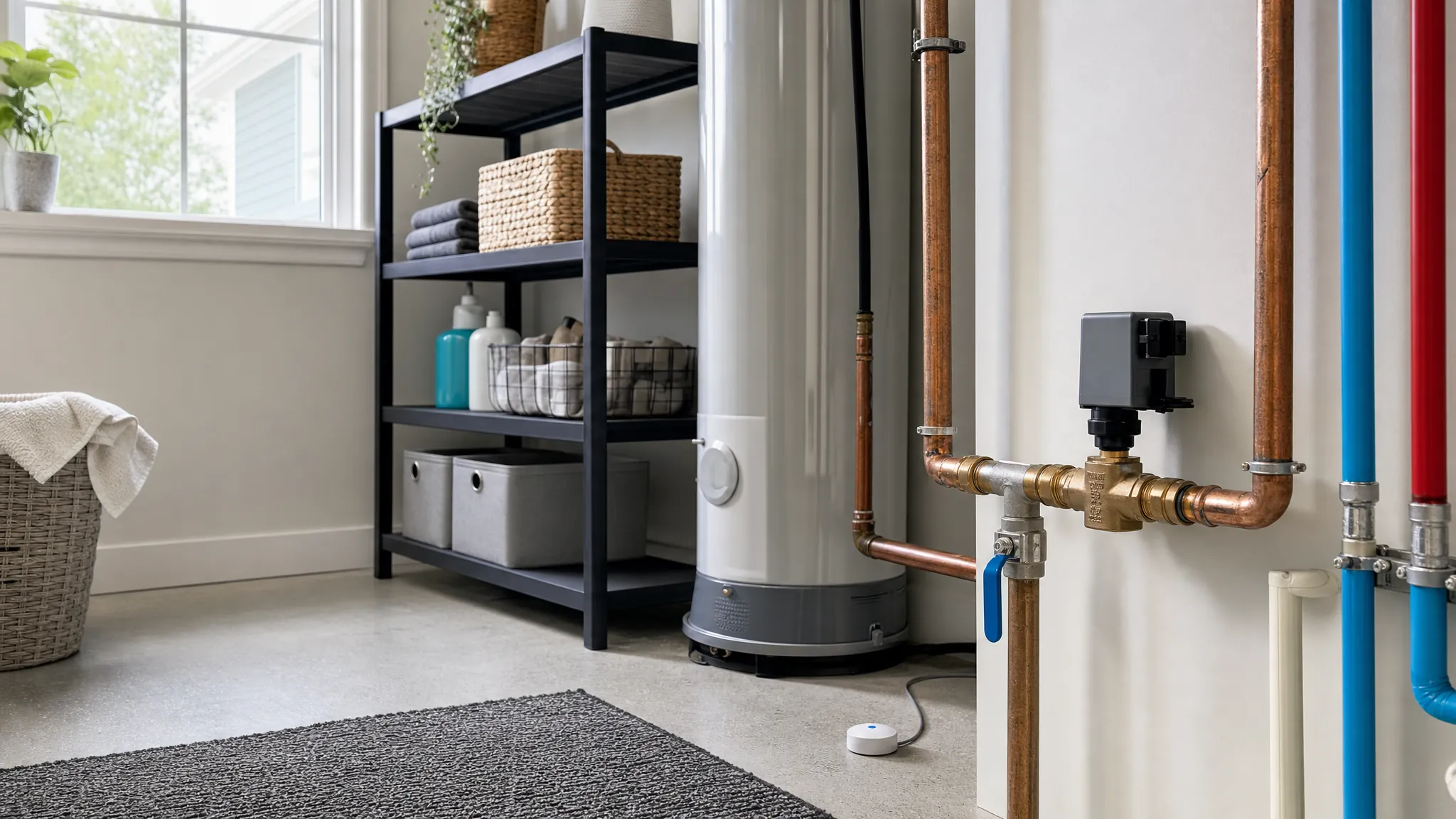
For most tank-style water heaters, start with a floor sensor immediately outside the drain pan or at the low edge beside it. A pan may catch a small amount of water, but a sensor needs to touch the water to alert you. If the pan has a drain line, do not place the sensor in a spot that will stay dry while water drains away. Look at where a slow overflow, a loose fitting, or a drain-valve drip would actually travel.
- On a level floor: place the sensor beside the pan at the lowest side, with the sensing contacts flat against the surface.
- On an uneven floor: use a small amount of water to understand which direction a spill would move, then place the sensor at that collection point.
- With a pan drain: follow the drain path and consider a second sensor near an accessible end point if the route is inside the home.
- Near fittings and valves: leave enough room to inspect and service the heater. Do not wedge a sensor where it can be crushed, kicked, or buried.

What a water heater leak alarm can and cannot do
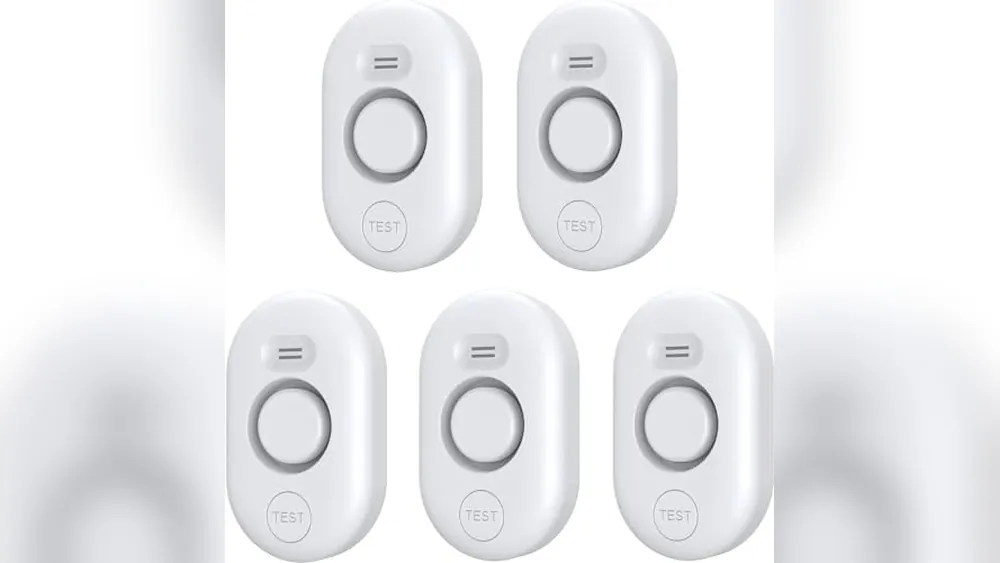
A basic water alarm detects moisture at its contacts and sounds locally. A connected version can also send an alert to a phone, and some systems can notify more than one person. That is useful when the water heater sits in a basement, garage, closet, or second home where a local beep might go unheard.
What it cannot do is diagnose the source of the water, judge whether a leak is harmless, repair a failed part, or guarantee that water will stop. Condensation, a pressure-relief discharge, a nearby appliance, and a leaking tank can all put water near the same sensor. Treat an alert as a prompt to inspect, not as a complete explanation.
If the tank, pipe, or connection is actively leaking, turn off the water only when it is safe to do so and use a qualified plumber for the repair. If you need a system that can close the main water supply after a confirmed leak, read our automatic water shutoff valve guide. That is a different decision from adding a local early-warning sensor.
Choose the alert path before choosing extra features
Start with the response you need. A local siren can be enough when someone is usually home and the heater is near living space. Mobile alerts are more useful when the heater is in a distant utility room, a basement, a rental, or a home that is regularly empty. The strongest setup is the one with a clear person who will notice the alert and check the area.
Before buying or installing anything, answer these questions:
- Can the local alarm be heard from the rooms people use?
- Will the phone alert still be useful if the home internet is unavailable?
- Can a second household member receive the alert when the primary contact is travelling?
- Does the sensor need a hub, an app account, or a nearby outlet?
- What happens when its battery runs low or the device loses its connection?
A straightforward local alarm can be the better fit when you want one dependable job with little setup. A connected sensor earns its place when remote awareness changes what you can do. Either way, keep the device manual and its battery requirements with the home's maintenance records.

Set the sensor up for the leak path, not the appliance outline
It is tempting to place a sensor directly against the tank because that looks tidy. But water does not always leave a heater at the same point. A drain valve can drip near the front. Connections can weep behind the unit. A pan can overflow at its lowest edge. The best position follows the likely path toward the floor's lowest point.
Start by clearing away boxes, rugs, paint cans, and other items around the heater. You need a clear view of the drain valve, supply lines, pressure-relief discharge pipe, pan edge, and floor. A crowded utility area makes both leak detection and a fast response harder.
Do not tape over sensing contacts, place the sensor inside a sealed plastic bag, or put it on a shelf to keep it out of the way. If the floor gets dusty, clean the spot before placing the sensor and include it in the normal utility-room tidy-up. If the manufacturer supplies a wired sensing cable, follow its instructions rather than improvising an extension.
Test the alarm while you have time to respond
Testing is the step that turns a purchased device into a useful safeguard. Follow the manufacturer's instructions, then put a few drops of clean water near the sensing contacts. Confirm the local alarm sounds, the phone notification arrives when applicable, and the right household members receive it. Dry the sensor completely and confirm it returns to its normal state.

Use the test to create a short response plan. Everyone who may receive the alert should know the water heater's location, the path to the nearest shutoff, and who to call when a leak is confirmed. Do not assume a guest, renter, or neighbour will know which valve belongs to the heater. A small label on the relevant shutoff can save time when somebody is trying to act calmly.
Repeat the test after a battery replacement, a Wi-Fi change, a phone upgrade, a long vacancy, or a move. A notification that worked last year may no longer reach the person who needs it today.
When one sensor is not enough
A sensor beside the water heater protects one collection point, not the whole house. If the heater is in a basement, other high-value locations may include the sump area, laundry connections, utility sink, water softener, and any pipe run that has leaked before. The right number of sensors depends on where water can cause damage and how quickly a problem would be noticed.
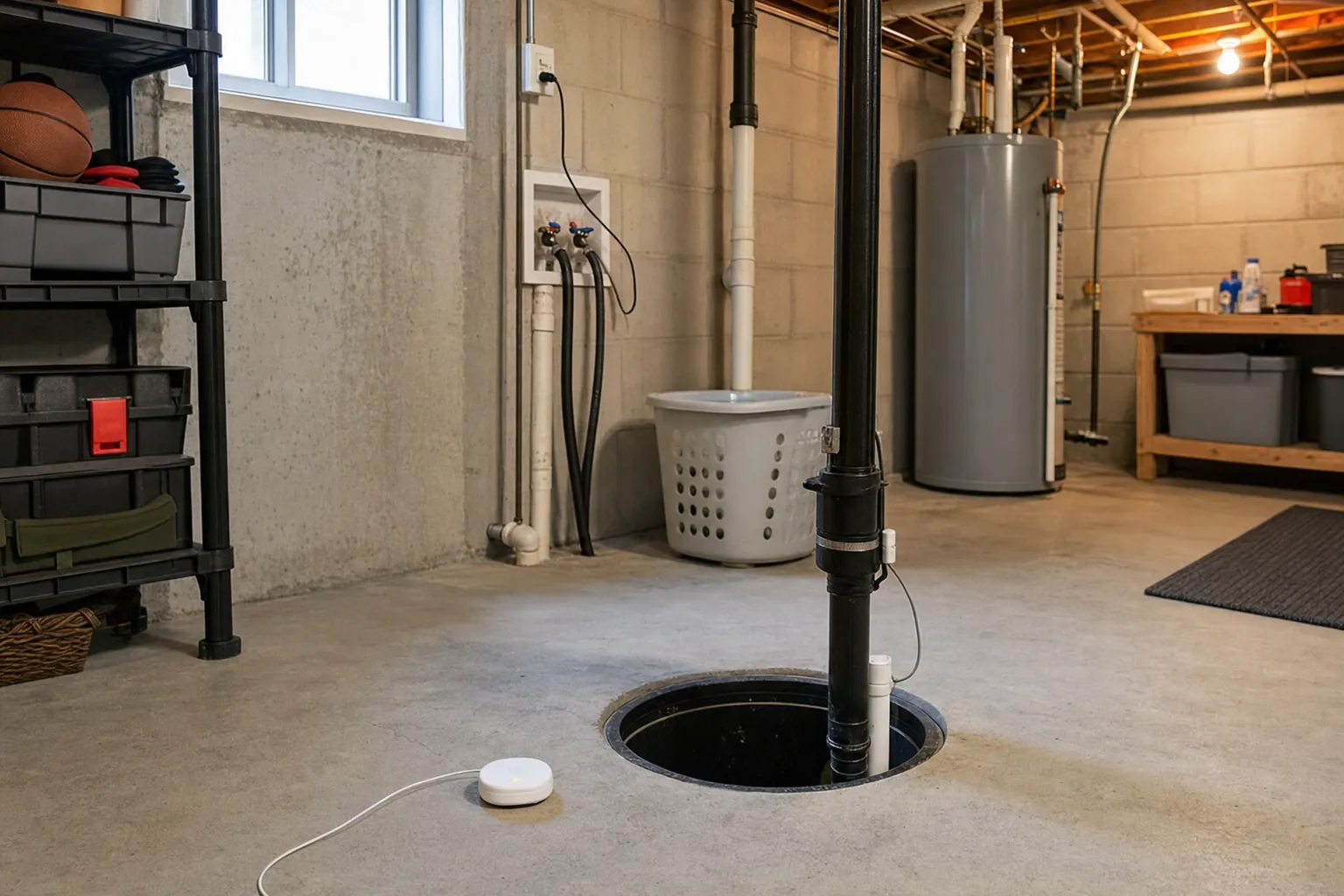
Build from the highest-risk location outward instead of buying a multi-sensor pack and scattering it randomly. Our basement water-alarm guide explains how to distinguish appliance-leak alerts from a sump-pit high-water alarm, so the alert matches the problem you are trying to catch. For a wider comparison of sensor styles and room-by-room placement, see the basement and bathroom leak detector guide.
If a leak would continue for hours because nobody can reach the home, a sensor may not be the complete answer. That is when an automatic shutoff plan, a trusted local contact, or a plumber's assessment becomes more important than another notification.
Common water-heater alarm mistakes to avoid
Placing it where water will not collect: A sensor on top of the heater, beside a wall uphill from the pan, or on a shelf may stay dry while water travels somewhere else. Follow the floor's slope and the pan edge.
Relying only on a phone alert: Mobile notices can be missed, silenced, delayed by connectivity, or sent to an old device. Use a local sound when practical and make sure more than one person understands the response.
Ignoring the reason for a one-time alert: A sensor that becomes wet once is telling you to inspect the area. Do not simply dry it and forget it. Look for a loose fitting, a slow valve drip, condensation, or a pan issue that needs attention.
Letting storage hide the heater: Stacked household items make it difficult to see water, reach a valve, or replace a battery. Keep a clear service space around the appliance according to the heater's manual and local requirements.
Using a sensor to delay a repair: An alarm is not a workaround for corrosion, repeated discharge, a leaking tank, or a damaged connection. When the same area keeps getting wet, treat the cause as the priority.
Renters and condo owners should confirm the response plan
Renters can often add a freestanding sensor without altering the property, but they should report a suspected water-heater leak promptly and follow the lease for emergency maintenance. Do not modify plumbing, pan drains, or shutoff equipment without permission. A simple sensor can help document that there was water in the area, but it does not replace the property manager's repair process.
Condo owners may have an extra reason to act quickly because water can affect a neighbouring unit. Find out whether the water heater and its shutoff are your responsibility, where building management wants leak reports sent, and whether a building-wide shutoff procedure applies. Keep those contacts where the person receiving an alert can find them.
Frequently asked questions
Where should I put a water heater leak alarm?
Put it at floor level beside the drain pan or at the lowest nearby point where water from the heater or its fittings would collect. Keep it accessible for testing and battery changes, and avoid placing it where a pan drain would carry water away before the sensor gets wet.
Do I need a leak sensor if my water heater has a drain pan?
A drain pan and a sensor do different jobs. The pan can direct or contain some water, while the sensor can alert you when it gets wet. A pan does not notify you, and a sensor does not repair the source of the leak.
Can a water heater leak alarm turn off the water?
Most stand-alone sensors only sound an alarm or send a notification. An automatic shutoff system can close a valve in some setups, but it needs its own compatibility, installation, and response planning. Confirm exactly what a product does before relying on it.
How often should I test a water leak sensor?
Test it when you install it, after a battery or network change, and on a regular home-maintenance schedule. Follow the product's instructions for the safe test method and confirm both the local alarm and any notification reach the intended people.
What should I do if the sensor alerts near the water heater?
Inspect the area promptly and safely. Look for visible water around the pan, drain valve, fittings, and floor. If there is an active leak, shut off water only if it is safe and you know the correct valve, then contact a qualified plumber or the property manager. Do not ignore repeat alerts.
The practical bottom line
The best water heater leak alarm is placed where water will actually collect, tested before it is needed, and paired with a response that the household can carry out. Start with a clear floor-level spot beside the pan, keep the area accessible, and use the alert as an early warning to inspect and act. For broader home coverage, build outward from the water heater with the same simple question: where would water go first, and who would know?