
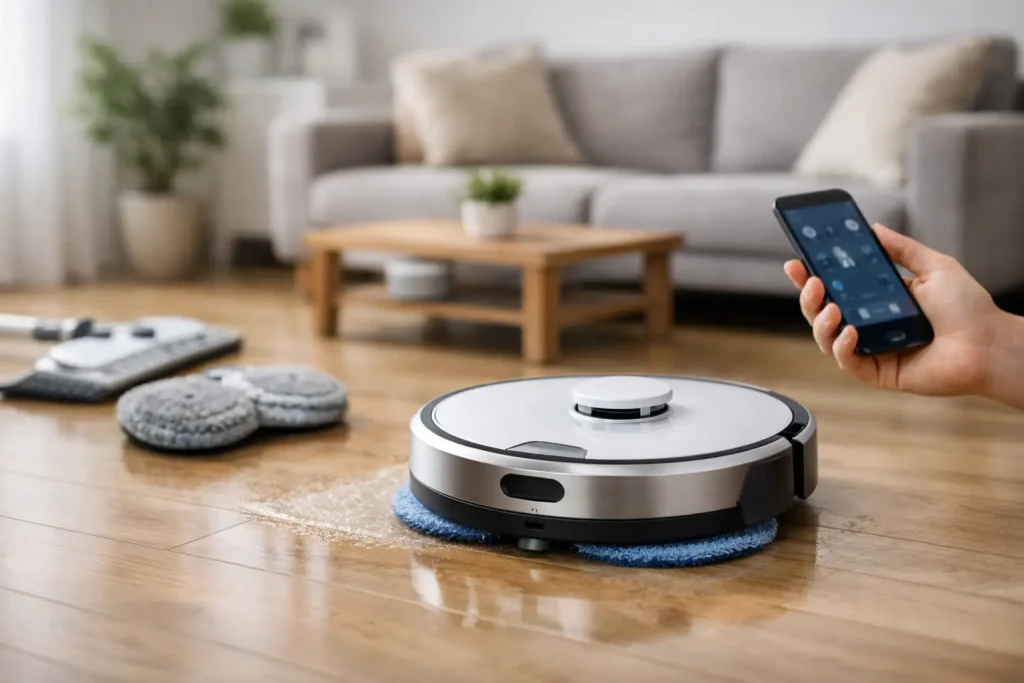
A sticky kitchen floor has a way of announcing itself at the worst possible moment: right after dinner, when the dog tracks in muddy paw prints, or five minutes before guests arrive. Robot mops can take that recurring chore off your plate, but only if you buy one that fits your floors, layout, and tolerance for maintenance.
They are especially useful for homes with sealed hard flooring – tile, vinyl, laminate, sealed hardwood, and stone – where crumbs, spills, pet tracks, and daily dust show up fast. They are not a replacement for every deep clean. Think of a robot mop as the household helper that keeps floors from reaching the “why does this feel gritty?” stage between your regular cleanings.
What Robot Mops Actually Do
Most robot mops work in one of two ways. Basic models drag a damp reusable pad across the floor while navigating in a pattern or using sensors. More capable models use rotating mop pads or vibrating pads to add scrubbing action, then return to a dock that may wash and dry the pads automatically.
Many current options are robot vacuum-and-mop combos. They vacuum dry debris first, then mop, either during the same run or as separate tasks. For busy homes, that combination is usually more practical than buying a mopping-only robot. A floor covered in crumbs or pet hair needs vacuuming before it needs water.
The big trade-off is simple: better cleaning automation usually brings a higher upfront cost and a larger dock. Entry-level machines can freshen lightly soiled floors well. Premium machines are better at edge cleaning, recognizing rugs, lifting their pads, avoiding pet messes, and keeping their own mop pads cleaner. Neither category can fully replace the hands-and-knees work needed for dried-on spills, thick grout lines, or corners behind furniture.
How to Choose Robot Mops for Your Home
Start with your floor plan, not the feature list. A small apartment with mostly vinyl flooring has very different needs from a two-story home with tile, area rugs, a shedding dog, and kids who treat the kitchen like a snack bar.
Match the mop to your floor type
Sealed tile and luxury vinyl plank are generally the easiest surfaces for robot mops. They tolerate regular damp cleaning and show the benefit quickly. Sealed hardwood can also work, but use the manufacturer-approved moisture setting and avoid leaving wet pads parked on the floor. If you are unsure whether a wood floor is properly sealed, check with the flooring maker before scheduling frequent mopping.
Laminate deserves extra care. A lightly damp pad is usually fine, while excessive water can work into seams and cause swelling. Look for a robot with adjustable water output, then begin with the lowest setting. Natural stone may need a specific cleaner or pH-neutral solution, so do not assume a robot’s included cleaning fluid is appropriate.
Decide whether rugs are part of the picture
Rugs create one of the most important buying decisions. A basic robot may require you to set virtual no-mop zones, roll up rugs, or remove the mop pad before it runs. That is manageable in a mostly hard-floor apartment, but it chips away at the convenience that made the robot appealing.
If your home has many rugs, prioritize a model that recognizes carpet and lifts its mop pads high enough to avoid dampening low-pile rugs. Some machines automatically return to the dock to leave their pads behind before vacuuming carpet. That approach is more thorough, though it can make a cleaning cycle longer.
Consider navigation before suction numbers
Marketing often focuses on suction power, but smart navigation has a bigger impact on daily satisfaction. A robot that maps rooms accurately, cleans in orderly lines, and lets you assign room-by-room schedules is easier to live with than one that wanders randomly and misses the kitchen.
For homes with chair legs, pet bowls, charging cords, and toys, obstacle detection matters. Camera- or sensor-based avoidance can reduce rescues during a run, although no system is perfect. Pick up cords, lightweight socks, and anything wet before sending the robot out. Pet owners should be especially cautious: even high-end avoidance systems can make mistakes in dim rooms or around unusual objects.
Be honest about dock space and upkeep
A self-washing, self-emptying dock can make mopping feel close to hands-off. It refills the robot’s water tank, collects dirty water, washes the pads, and may dry them to reduce odors. It is a great fit for large homes or anyone who wants frequent mopping without daily pad washing.
But the dock needs a dedicated outlet, clearance around it, and enough vertical space. It also adds cost and still requires care. You will empty dirty water, refill clean water, wipe trays, and replace consumables. A simpler robot with a washable pad can be a smarter, more affordable fit for a small home where you do not mind filling a tank every few days.
Features Worth Paying For
Not every upgrade earns its price. These are the features that tend to make the most noticeable difference in real homes:
- Adjustable water levels help protect laminate and hardwood while giving tile a more useful scrub.
- Room maps and targeted cleaning let you run the kitchen after breakfast without cleaning the entire home.
- Rotating or vibrating pads handle everyday stuck-on residue better than a passive damp cloth.
- Rug detection or pad lifting prevents the frustrating problem of damp carpets.
- Self-washing and drying docks reduce the work of frequent mopping, particularly in pet-friendly homes.
A detergent dispenser can be convenient, but it is not essential. Use only cleaning solution approved for your specific robot. Household floor cleaner can foam, leave residue, clog internal parts, or damage water tanks. Plain water is often the safest choice when the manufacturer allows it.
Set Up a Routine That Makes the Robot Useful
The best schedule is usually short and frequent. Running the robot in high-traffic areas three to five times a week often produces better results than waiting for one long weekend cleaning session. If your model vacuums and mops, have it vacuum the whole home first, then mop the kitchen, entryway, and dining area where grime builds fastest.
During initial setup, create the map carefully. Open interior doors, move loose cables, and let the robot complete its first mapping run without interruption. Label rooms in the app and set no-go zones around pet bowls, thick bath mats, delicate furniture, and places where the robot may get stuck.
Voice control through Alexa or Google Home can be handy for a quick command like cleaning the kitchen. Still, the app is where the useful controls live: schedules, water settings, room order, map editing, and maintenance alerts. Treat voice control as a bonus rather than the deciding feature.
For renters, robot mops are an easy smart-home upgrade because they require no drilling, rewiring, or landlord approval. Just confirm there is a practical spot for the dock and that your Wi-Fi reaches it reliably. Most models use 2.4 GHz Wi-Fi, so check your router settings if pairing fails.
Keep Cleaning Expectations Realistic
Robot mops are excellent maintenance cleaners. They handle fresh footprints, light kitchen splatter, fine dust, and the film that accumulates on hard floors. They are less impressive against dried syrup, greasy buildup, and grout that has not been cleaned in months.
Before each run, clear obvious hazards and make sure the pads are clean. Afterward, inspect the pads and dirty-water tank if your robot has one. Leaving wet pads sitting for days is the fastest route to odors. Clean sensors and wheels regularly, too, since dust buildup can hurt navigation over time.
Privacy deserves a quick check as well. Mapping robots may collect layout data, and models with camera-based obstacle avoidance can process images inside your home. Use a strong, unique account password, turn on two-factor authentication if offered, install firmware updates, and review the app’s data-sharing settings. Convenience should not mean giving up control of your home data.
A well-chosen robot mop will not make every floor chore disappear. What it can do is keep everyday messes small enough that cleaning stops hijacking your weekend. Start with the rooms that annoy you most, choose automation you will actually use, and let the robot earn its place in your nest one clean kitchen floor at a time.