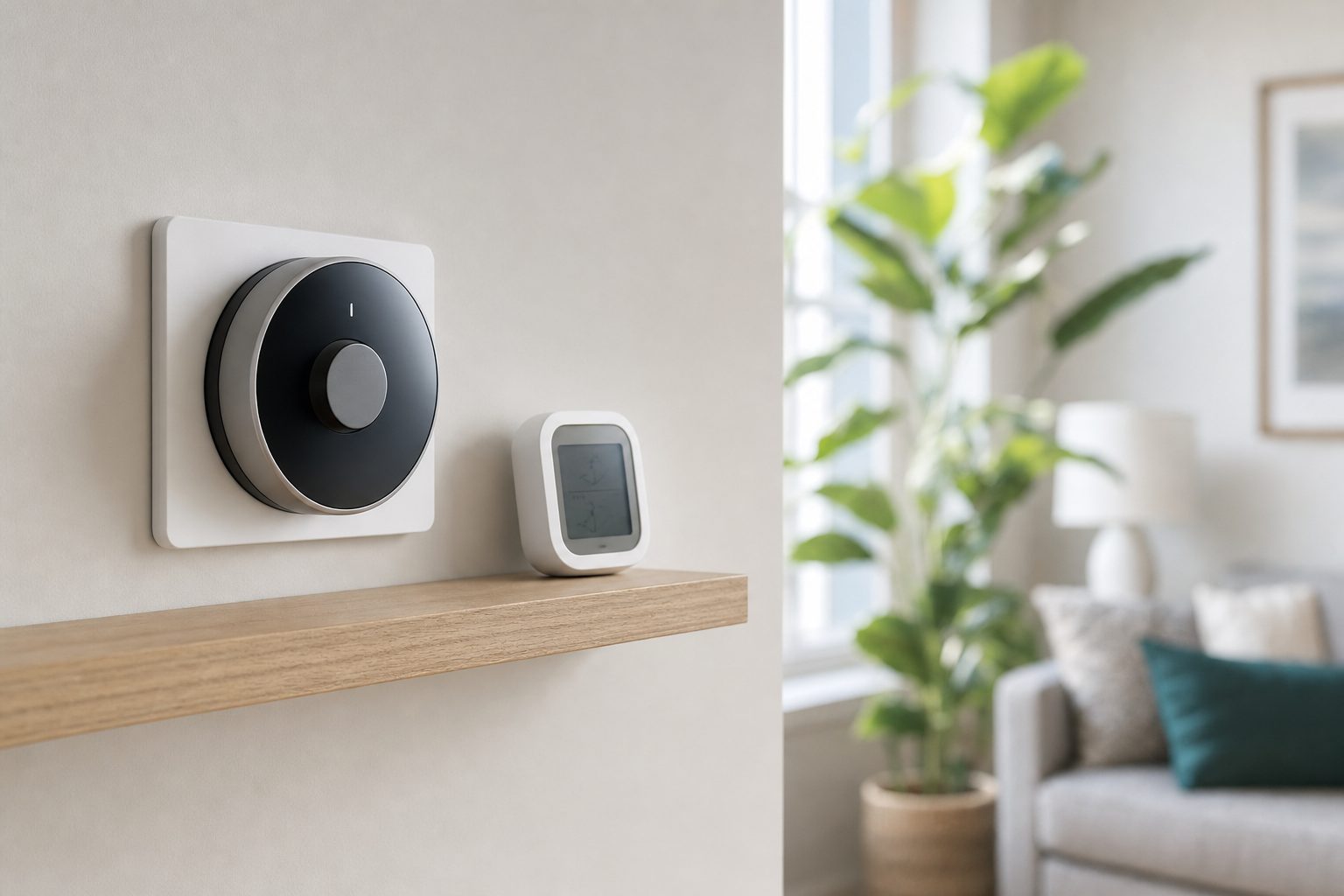
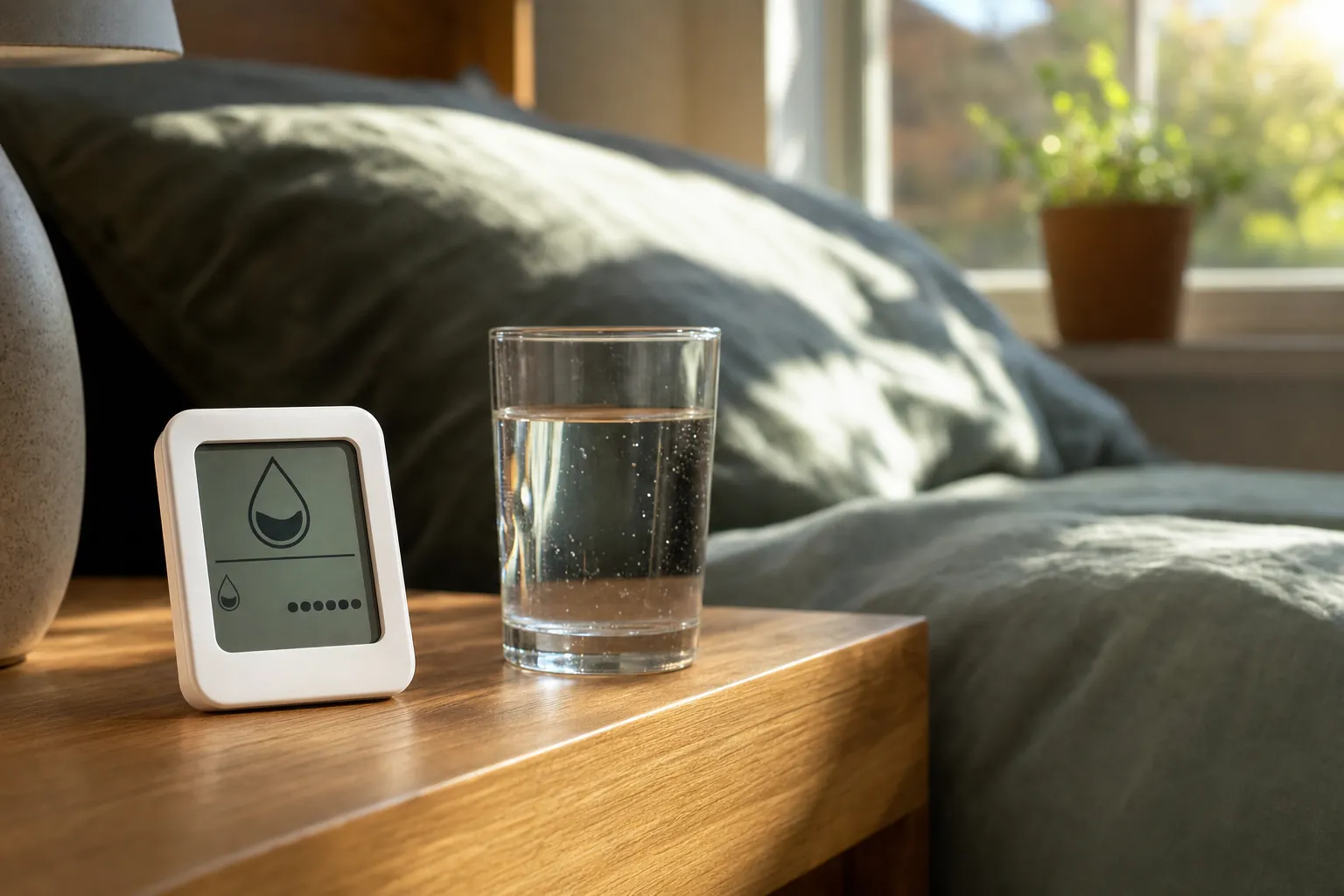
A smart humidity sensor is a small way to replace a vague comfort complaint with a useful pattern. If a bedroom feels stuffy at night, a basement feels clammy after rain, or a laundry room never quite dries out, the sensor can show when the change happens and whether it repeats. That information is more useful than checking a single number on a warm afternoon.
The sensor is not a dehumidifier, a mold test, or a diagnosis. It cannot tell you why a room is damp or solve a leak. Its job is simpler: measure temperature and relative humidity in the part of the home that is bothering you, then help you choose a proportionate next step. Sometimes that step is opening a door, running a bathroom fan, clearing a blocked vent, or changing a laundry routine. Sometimes it is a conversation with a landlord, HVAC technician, or plumber.
This guide explains what a smart humidity sensor can do, where to place it, how long to watch the data, and what to do when a pattern is worth acting on. For a broader room-by-room comfort setup, SavvyNests’ smart temperature sensor guide explains how a room reading can fit alongside the thermostat you already have.
Quick answer: when is a smart humidity sensor useful?
A smart humidity sensor is most useful when a comfort or moisture question happens in a particular room and you need a clearer picture before changing equipment. It can help a homeowner compare a basement with the main floor, a renter document a bedroom that feels damp every morning, or a household see whether cooking, showers, laundry, weather, or air-conditioning cycles line up with a humidity change.
Use it to answer a question, not to create another dashboard. A good first question might be: “Does the bedroom stay humid overnight?” “Does the laundry room stay damp after a load?” or “Is the basement actually different after rain?” Pick one room and one ordinary week. If the result leads to no possible action, turn off the extra alerts and keep the setup simple.
What the humidity number means
Most home sensors report relative humidity, shown as a percentage. It describes how much water vapor is in the air compared with how much the air can hold at that temperature. That is why the same amount of moisture can produce a different relative-humidity reading as the room warms or cools. Read the humidity figure alongside temperature and the real activity in the room, rather than treating one number as a complete diagnosis.
The U.S. Environmental Protection Agency advises keeping indoor humidity below 60 percent, ideally between 30 and 50 percent when possible, as part of moisture control. Its mold and moisture guide also makes the important point that moisture control is the key, not simply hiding a reading with an alert. The right range can still vary with the season, local climate, cold windows, and the way a home is built.
Think in patterns. A bathroom that briefly rises after a shower may be normal, especially if it drops after the fan runs. A room that stays high for hours, regularly develops window condensation, smells musty, or shows visible moisture needs a closer look at the source. The CDC’s home mold guidance recommends keeping humidity as low as practical, no higher than 50 percent all day long, and fixing the moisture problem if mold is growing. A sensor can support that investigation. It does not replace it.

Where to place a smart humidity sensor
Put the sensor where people spend time or where the concern appears, but give it a fair chance to measure the room instead of one unusual surface. A shelf, side table, or wall location at roughly breathing height is usually more helpful than the floor, a windowsill, or a spot directly above a heat source. Keep it away from direct sun, supply vents, exterior doors, steamy bathrooms, and the immediate blast of a humidifier or dehumidifier unless that specific equipment is what you are testing.
- Bedroom: Place it near the sleeping area but away from an open window, radiator, vent, or the breath zone right beside a pillow. The overnight trend matters more than the reading at bedtime.
- Basement: Choose the area that feels damp or where stored items, a utility room, or an exterior wall raise concern. Do not place it directly on a cold concrete floor.
- Laundry room: Keep it clear of the dryer exhaust and washer spray zone. You want to see whether the room recovers after normal laundry, not the peak next to a running machine.
- Bathroom: Use a sensor just outside the direct shower steam path when checking whether the fan clears the room. A sensor that gets wet will not tell you much about normal room conditions.
- Main living area: Use a central location to compare with a problem room. That comparison can reveal whether the issue is house-wide or isolated.
If the goal is to help a thermostat respond to a room, make sure the sensor is compatible with that exact thermostat. A standalone Wi-Fi or Bluetooth sensor can show a useful reading without controlling heating or cooling. That is not a failure, it is simply a different job. SavvyNests’ thermostat humidity-control guide explains the difference between monitoring humidity and actually controlling compatible HVAC equipment.
Watch a normal week before changing anything
Give the sensor at least several ordinary days. Note anything unusual: a stretch of rain, guests, a long shower, windows left open, a heavy laundry day, or an air conditioner that was turned off. Those details keep one exceptional day from becoming a costly conclusion.
- Start with one room and one question. Name the sensor after the room so the graph stays understandable.
- Check the same times each day. Morning, late afternoon, and bedtime are enough for a first review when the app does not summarize trends clearly.
- Compare the room with a calmer area. A second sensor in a main living area can show whether the problem is local or spread through the home.
- Match spikes to real events. Cooking, showers, laundry, rain, a closed door, and an HVAC cycle all provide useful context.
- Change one thing at a time. Run the bath fan longer, clear a vent, or use a dehumidifier as directed, then compare another similar day.
The goal is a before-and-after test that is easy to explain. If a bedroom stays humid only when the door is closed overnight, try a small, safe airflow adjustment before buying new equipment. If the pattern is steady throughout the home, check the broader heating and cooling plan instead of treating one room sensor as the whole answer. The Smart Home Automation Guide can help turn a reliable room pattern into one simple routine rather than a stack of notifications.
Turn a reading into the right next step
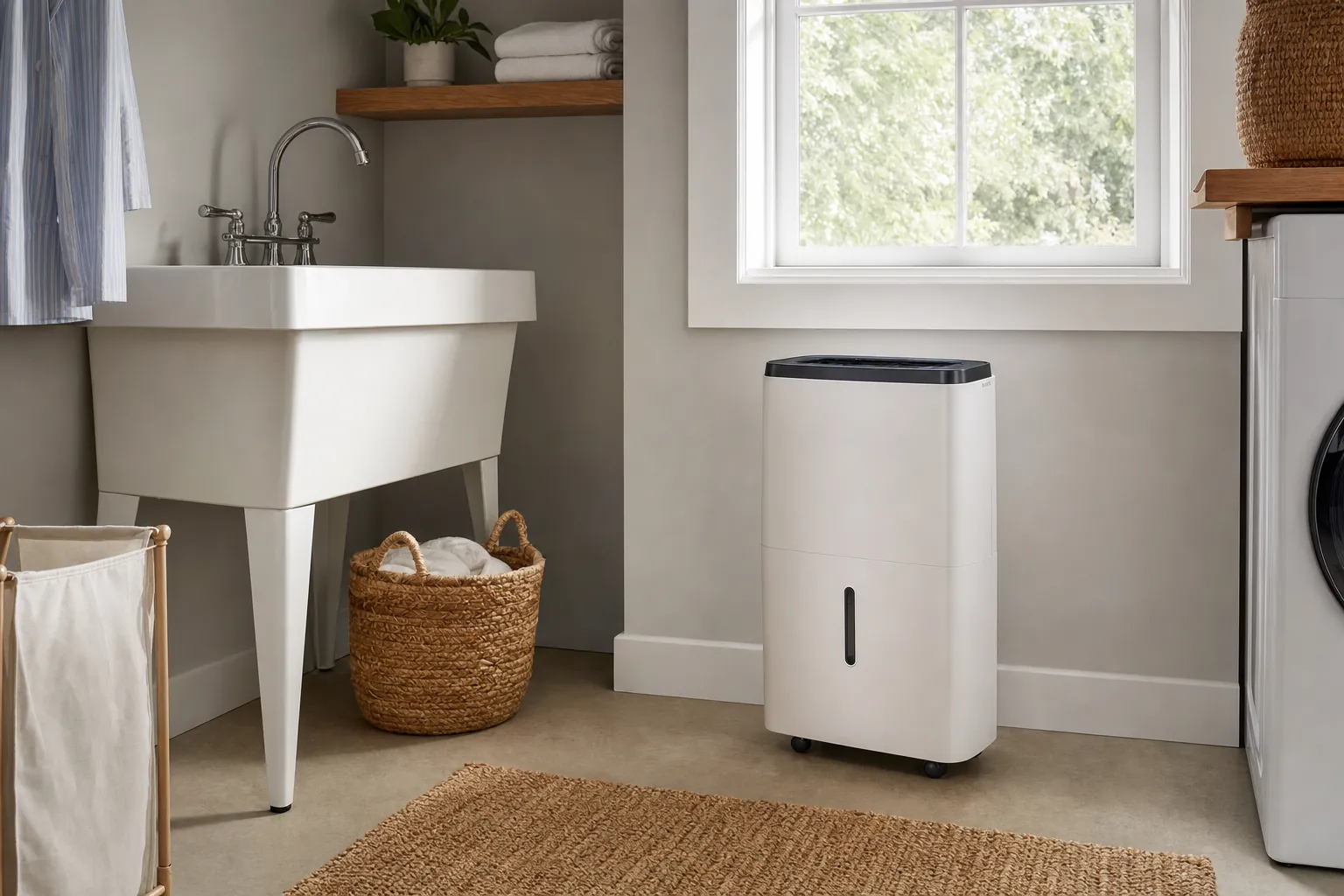
A high reading is a signal to investigate, not an instruction to buy a gadget. Start with the smallest safe change that addresses the likely cause. The EPA recommends controlling moisture sources, using adequate ventilation, and using air conditioning or dehumidification where appropriate. Its moisture-control advice also points to bathrooms, dryers, cooking, and cleaning as places where good ventilation matters.
For a bathroom, make sure the exhaust fan is working and run it long enough to clear moisture. For laundry, confirm that the dryer is vented as intended and that the room can recover after a load. For a basement, look for visible water, a plumbing leak, poor drainage, or a dehumidifier that is not keeping up. If the sensor shows a sudden change near a water heater, sink, or appliance hose, do not wait for a trend. Check for water first. A basement water-alarm guide can help you plan focused leak alerts around a known risk area.
When a room feels uncomfortable but the humidity is ordinary, the answer may be temperature, airflow, sunlight, insulation, or the location of the thermostat. That is why a combined temperature and humidity sensor is often more useful than a humidity number alone. It gives you evidence to share with a property manager or qualified professional without guessing at the cause.
Set alerts that lead to an action
Alerts should earn their place. An alert that arrives during every shower will be ignored within a week. Start with a wide threshold and a delay, if the sensor supports one. For example, a basement alert can be useful when a sustained change is unusual for that space. A bedroom alert can be useful when a pattern stays high overnight, not when a person briefly opens a window on a humid day.
Write down what you will do when the alert arrives. That could be checking a window, running a fan, emptying a dehumidifier, looking for a leak, or contacting the property manager. If there is no practical response, remove the alert and review the trend occasionally instead. A sensor should make the home easier to understand, not make it feel like a control room.
Smart humidity sensors for renters and shared homes
A portable sensor is a low-commitment choice for renters because it can sit on a shelf and move with you. It can also help document a repeated comfort issue clearly: the room, the date, the reading, the weather, and whether visible condensation or moisture was present. Share the pattern with the person responsible for the building rather than attempting to alter central equipment without permission.
Keep the setup considerate in a shared home. Put the sensor in a room where everyone understands why it is there, choose only the people who need alerts, and avoid treating a normal shower or cooking routine as someone else’s problem. For portable upgrades that do not require changing wiring, see SavvyNests’ smart-home guide for renters.
When a sensor should lead to a professional call
Do not use a sensor to delay a safety or moisture response. Act promptly when there is visible mold, water damage, a plumbing leak, a musty odor that persists, a soaked building material, or a major change that does not match normal household activity. The EPA advises drying damp materials and areas within 24 to 48 hours after a leak or spill when possible, and fixing the water source. If a concern involves electrical equipment, HVAC work, plumbing behind a wall, or a large mold area, bring in the appropriate qualified help.
A sensor is valuable because it helps you notice the difference between a passing condition and a repeating one. It is not valuable when it gives false reassurance while a real moisture problem continues.
How SavvyNests helps you make sense of room comfort
SavvyNests helps you start with the room and the routine, then choose the smallest next step that makes daily life better. Once you understand a humidity pattern, use the room-sensor guide to compare sensor roles, or the humidity-control guide to decide whether your HVAC system can genuinely respond. If energy use is also part of the question, the smart home energy monitor guide shows how to test a household pattern before adding another upgrade.
Frequently asked questions
Where should I put a smart humidity sensor?
Place it in the room you want to understand, at a representative height, away from direct sun, vents, windows, radiators, showers, and the immediate output of a humidifier or dehumidifier. A shelf or side table away from those extremes is often a useful starting point. The best placement is one that reflects the air people experience, not the hottest, coldest, or dampest corner.
What humidity level should I set an alert for?
Start with the pattern in your own home rather than a single universal alert. The EPA advises keeping indoor humidity below 60 percent, ideally between 30 and 50 percent when possible. A sustained rise, condensation, visible moisture, or a room that fails to recover after normal activity is more meaningful than one brief peak.
Can a smart humidity sensor detect mold?
No. It measures air conditions, not mold. It can show a pattern that makes moisture worth investigating, but it cannot identify the source of dampness or confirm what is growing on a surface. Visible mold, water damage, or a persistent musty smell calls for moisture control and, when needed, qualified help.
Do I need a smart humidity sensor in every room?
Usually not. Start with the room that has a real comfort or moisture question, then compare it with a main living area if needed. Add another sensor only when it answers a new question, such as whether a basement behaves differently from the rest of the home.
Can a humidity sensor control my thermostat?
Only when the sensor and thermostat are designed to work together and the HVAC equipment supports the intended humidity response. A standalone sensor can still be useful for monitoring, but it does not automatically change heating, cooling, or dehumidification settings.