
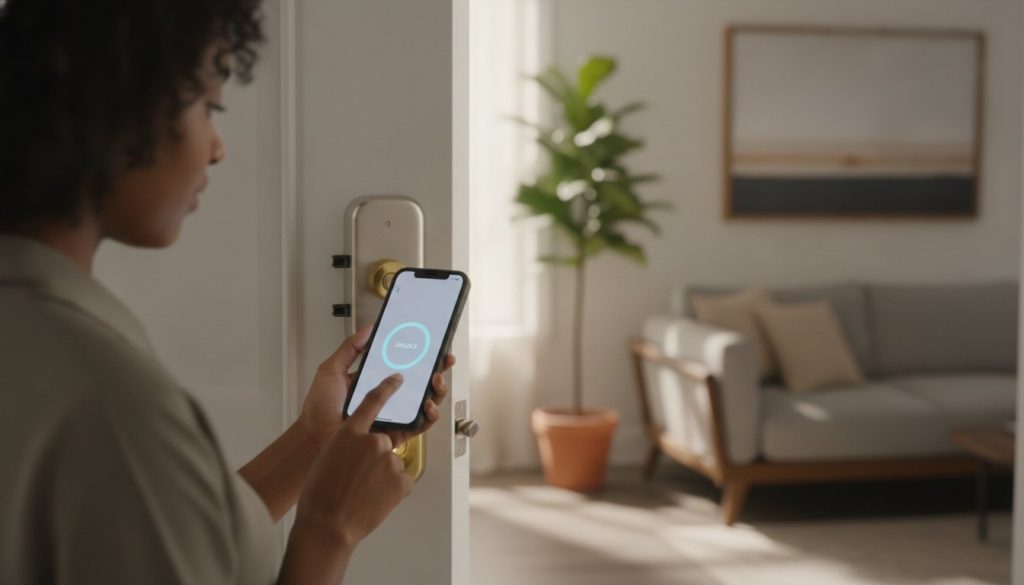
What if you could enjoy a high-tech smart home without ever touching a power drill or risking your security deposit? It’s a common frustration for many renters. You want the convenience of keyless entry, but the thought of drilling holes or messing with complex wiring feels overwhelming. You shouldn’t have to choose between modern security and your lease agreement. Finding a smart lock no drilling required is the smartest way to upgrade your lifestyle while keeping your landlord happy.
You’ll discover how to secure your home with high-tech devices that install in minutes without leaving a single hole in your door. We’ve done the heavy lifting to find the best solutions for 2026 that offer remote access and total peace of mind. This guide explores top-rated retrofit models that fit over your existing hardware, ensuring your installation is 100% reversible. We will walk you through the most reliable options, from budget-friendly picks to premium designs, so you can find the perfect fit for your specific door type without any stress.
Key Takeaways
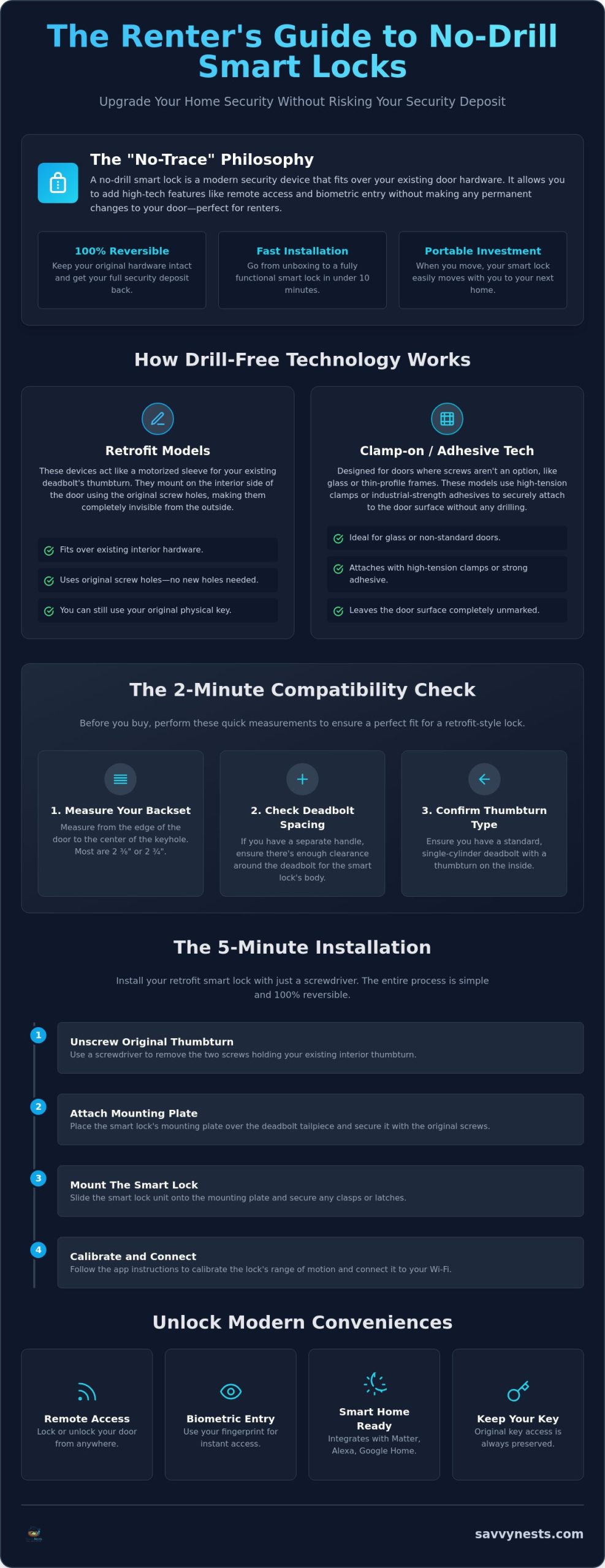
- Learn how the “No-Trace” philosophy allows you to upgrade your home security with high-tech features while keeping your original door hardware completely intact.
- Understand the mechanical differences between retrofit adapters that grip your existing thumbturn and non-invasive clamp technology designed for glass or thin-profile doors.
- Use our simple 2-minute compatibility test to measure your backset and deadbolt spacing, ensuring a perfect fit before you make a purchase.
- Discover why choosing a smart lock no drilling required is the most savvy way to add biometric fingerprint access and remote entry without risking your security deposit.
- Follow a straightforward 5-minute installation process that uses simple adapters and original screws for a setup that is 100% reversible when your lease ends.
What is a No-Drill Smart Lock and Why Do You Need One?
A no-drill smart lock is a modern security device designed to fit onto your door using existing hardware holes or specialized adhesive and clamp technology. Unlike traditional models that require you to bore new holes into the frame or door face, these savvy solutions work with what you already have. This category is the backbone of the “No-Trace” philosophy. It’s a commitment to making your home smarter without leaving any permanent marks or scars behind. It saves you from that awkward “landlord talk” where you have to ask permission for every minor upgrade. You get the tech you want without the paperwork you hate.
Understanding what is a smart lock and how it functions is the first step toward a more convenient lifestyle. In 2026, choosing a smart lock no drilling required doesn’t mean you’re sacrificing strength for simplicity. With the global smart lock market projected to reach $3.7 billion this year, the technology has matured significantly. These locks use the same high-grade encryption and durable materials as their permanent counterparts. They simply use clever engineering to stay in place, often integrating seamlessly with the latest Matter smart home standards for universal compatibility.
To better understand how these devices simplify your home security, watch this helpful video:
The Renter’s Security Dilemma
For many people living in apartments, the desire for better security often hits a wall called the lease agreement. While specific numbers vary by region, a large portion of standard leases strictly prohibit any permanent alterations to door hardware. Replacing a damaged door can cost hundreds of dollars, which easily wipes out a security deposit. A smart lock no drilling required solves this by being entirely reversible. You don’t need to hire a locksmith or worry about losing your deposit. You can find more ways to upgrade your space in our guide to The Best Smart Home Devices for Renters in 2026.
Benefits Beyond the Security Deposit
Speed is perhaps the most immediate benefit you’ll notice. You can often go from unboxing your device to seeing a live status on your phone in under 10 minutes. This efficiency is perfect for busy professionals or anyone who feels anxious about using power tools. Because these locks are portable, your investment travels with you. When it’s time to move, you just swap back the original thumbturn and pack your smart lock for your next home. This also preserves the look of high-end or historic doors, as you never have to worry about mismatched finishes or ugly holes. It’s security that respects the aesthetic of your environment.
How Drill-Free Technology Works: Retrofit vs. Replacement
Choosing the right tech starts with understanding how it actually stays on your door. Not all no-drill solutions are built the same way. Some models “grip” your existing parts, while others replace the entire internal assembly. The most popular choice for renters is the retrofit model. It’s essentially a motorized sleeve for your existing deadbolt. Because it only touches the interior side of the door, your landlord or neighbors won’t even know it’s there. This makes a smart lock no drilling required the ultimate stealth upgrade for any apartment. The mounting plate provides a solid foundation by using the pre-existing screw holes from your original thumbturn, ensuring the device won’t budge even with daily use.
For those with unique door styles, clamp-on technology offers a different solution. These devices use high-tension clamps or industrial strength adhesives to secure the lock to glass doors or thin-profile frames where traditional screw holes aren’t an option. Regardless of the mounting style, the exterior of your door remains completely unchanged. You can still use your original physical key whenever you want. Many top-rated smart locks in 2026 prioritize this “hybrid” approach, giving you the best of both high-tech convenience and traditional backup security.
The Anatomy of a Retrofit Smart Lock
Adapters are the secret sauce of a successful installation. Since deadbolt brands like Schlage or Kwikset use different shapes for their internal components, manufacturers include a kit of various plastic adapters. The tailpiece is the metal bar connecting the key cylinder to the thumbturn. The smart lock’s motor engages this bar through the specific adapter you select. This allows the motor to slide the bolt home just as smoothly as if you were turning it by hand. If you’re unsure which adapter matches your hardware, you can always reach out to our support team for a quick compatibility check.
Adhesive vs. Mechanical Mounting
Most experts prefer mechanical mounting because it relies on the physical strength of the door’s steel components. However, for specific scenarios where you can’t access screw holes, industrial adhesives have come a long way. These “no-trace” adhesives can withstand significant force. Just be sure to prep the surface with alcohol first to ensure a clean bond. Keep in mind that extreme temperature swings in a drafty hallway can cause lower-quality tapes to expand or contract. Always check that your smart lock no drilling required is rated for your local climate to prevent the device from shifting over time.
Comparing the Best No-Drill Smart Lock Categories for 2026
Finding the right smart lock no drilling required means looking past the sleek marketing and understanding which category actually fits your daily habits. In 2026, the market has expanded beyond basic Bluetooth boxes to include sophisticated devices that cater to every door type. Whether you have a standard deadbolt or a unique European-style handle, there’s a solution that respects your lease. By grouping these into specific categories, we can help you filter out the noise and focus on what works for your specific home layout.
Retrofit deadbolt adapters remain the gold standard for most homes in North America. These devices replace only the interior thumbturn, leaving the exterior lock completely untouched. This is a huge win for maintaining a consistent look in apartment hallways. According to The Best Smart Locks of 2026, retrofit designs are often the best choice for renters because they require zero modifications to the door’s structural integrity. For those on a strict budget, smart “key turners” offer a similar benefit by physically rotating a key left in the lock, though they can be bulkier than integrated adapters.
Matter and Thread: The 2026 Connectivity Standard
If you’re buying a lock this year, Matter compatibility should be at the top of your list. Matter is the universal language that allows your lock to talk to Apple Home, Google Home, and Amazon Alexa without needing specialized hubs for each. When paired with Thread technology, these locks respond almost instantly and use significantly less battery power than older Wi-Fi models. It’s about future-proofing your investment. To see how these standards fit into your broader home setup, check out The Ultimate Smart Home Buying Guide for expert ecosystem advice.
Biometric vs. Keypad Access
Choosing between a fingerprint sensor and a physical keypad often comes down to who needs access to your home. Biometric sensors are incredibly convenient for solo renters; you’ll never have to faff with a phone or a key while carrying groceries. Most modern smart lock no drilling required options now store biometric data locally on the device for enhanced privacy. However, a physical keypad is a savvy backup. It allows you to create temporary codes for dog walkers or guests without requiring them to download an app. Having both options ensures that you’re never locked out, even if a fingerprint sensor struggles with wet or cold hands.
The Savvy Buyer’s Checklist: Finding the Perfect Fit
Before you click buy, you need to be sure your door is ready for an upgrade. Even the most advanced smart lock no drilling required can fail if the physical dimensions don’t match your hardware. Most of these devices are designed to fit standard American doors, but a few quick measurements will save you from a return shipping headache. You want a seamless fit that looks like it belongs there, not a bulky addition that interferes with your door handle. Taking a few minutes to prep now ensures your installation remains the five-minute task it’s supposed to be.
Physical Compatibility: Will it Fit Your Door?
The most critical measurement is the clearance between your existing door handle and the deadbolt. If they’re too close, the body of the smart lock might block your hand when you try to open the door. You also need to check for “tapered” deadbolts. These bolts are narrower at the tip, which can sometimes cause the motor to jam if the alignment isn’t perfect. Most no-drill locks require a standard single-cylinder deadbolt to function correctly. Take two minutes to verify these three things before you commit:
- Backset: Measure from the edge of the door to the center of the deadbolt, which is usually 2 3/8 or 2 3/4 inches.
- Deadbolt Spacing: Ensure there is at least one inch of clearance above and below the thumbturn.
- Bolt Throw: Make sure your bolt extends fully into the door frame without sticking or requiring you to pull the door tight.
Power management is another savvy consideration for renters. Since a smart lock no drilling required relies on your existing door prep, it can’t be hardwired for power. You’ll usually find these devices powered by CR123A batteries or custom rechargeable packs. These offer high energy density in a small footprint, which is essential for keeping the device compact and sleek. Look for apps that offer robust guest access management. In 2026, the best apps allow you to set recurring schedules for cleaners or one-time codes for deliveries, giving you total control over who enters your home and when.
Smart Home Ecosystem Alignment
Your new lock should feel like a natural extension of your digital life. If you’re already using an iPhone to manage your lights, choosing a lock that supports Apple Home Key will allow you to unlock your door with a simple tap of your watch. You can find the right match for your setup in our guide to the Best Smart Home Hub for Apple HomeKit in 2026. For those who prioritize privacy, look for locks that offer local control. This ensures your data stays within your home network rather than traveling to a cloud server every time you lock up. If you’re still unsure about your door’s specific dimensions, you can send us a photo of your lock for a personalized compatibility check.
How to Install Your No-Drill Smart Lock in 5 Minutes
Setting up a smart lock no drilling required is a straightforward project that delivers immediate results. While some marketplaces claim no tools are needed, you’ll typically just need a standard manual screwdriver to handle the interior mounting. This process is entirely reversible, ensuring your door looks exactly as it did when you moved in. By following a methodical approach, you can eliminate the friction of traditional home upgrades and start enjoying keyless entry before your coffee gets cold.
Follow these five simple steps to complete your installation:
- Step 1: Remove the interior thumbturn. Use your screwdriver to remove the screws holding the interior piece of your deadbolt in place. Be sure to keep these original screws in a safe spot, as you’ll need them to restore the door later.
- Step 2: Select the correct adapter. Your lock kit comes with a variety of color-coded adapters. Find the one that matches the shape of your deadbolt’s tailpiece to ensure the motor can turn the bolt without slipping.
- Step 3: Secure the mounting plate. Position the mounting plate over the tailpiece and use the original deadbolt holes to screw it into place. This provides a solid foundation without adding a single new hole to the door.
- Step 4: Snap the motor unit on. Align the smart lock body with the adapter and mounting plate. Most models use a slide-and-click mechanism that secures the unit in seconds.
- Step 5: Calibrate via the app. Open the manufacturer’s app on your smartphone and follow the prompts. The motor will move the bolt back and forth to learn the exact distance it needs to travel for a secure lock.
Common Installation Pitfalls to Avoid
The most frequent mistake is the “Over-Tightening Trap.” If you crank the mounting plate screws too tight, it can slightly compress the door’s internal mechanism, causing the motor to struggle or jam. If you hear the motor straining, try loosening the screws by a quarter turn. If the app reports a calibration error, ensure the bolt moves freely by hand before trying the digital setup again. For more help with specific connectivity or mechanical issues, check out The Savvy Smart Home Troubleshooting Guide.
Landlord-Friendly Tips for a Smooth Exit
A savvy renter always plans for the move-out day. Store your original thumbturn and screws in a labeled heavy-duty freezer bag and tape it to the inside of a kitchen cabinet or keep it in your junk drawer. This prevents a frantic search when your lease ends. You might also consider setting up a permanent “Guest Code” for your landlord. This allows them to enter for scheduled maintenance or emergencies without needing a physical key, which builds trust and shows you’re a responsible tech user. The best part of a smart lock no drilling required is that it’s an investment you take with you, making your next home just as smart as this one.
Take Control of Your Home Security Today
Security in a rented space no longer requires a compromise between modern convenience and your lease agreement. By choosing a retrofit design, you can enjoy remote access and guest codes while keeping your original hardware safe for move-out day. These 2026 solutions are designed to be as portable as they are powerful, ensuring your investment follows you to your next home. You’ve learned that measuring your clearance and checking for Matter compatibility are the keys to a stress-free setup.
Our team has dedicated over 500 hours of hands-on testing to these devices, focusing on Matter-certified technical reviews that prioritize privacy and speed. We’re proud that our curation process contributed to the 2026 Renter Security Awards. Finding a smart lock no drilling required is the ultimate way to enjoy keyless entry while protecting your security deposit. You deserve a home that feels secure and modern without the anxiety of permanent changes.
Build your no-trace smart home with our top renter-friendly recommendations at SavvyNests. You’re just five minutes away from a smarter, more convenient lifestyle.
Frequently Asked Questions
Will a no-drill smart lock void my apartment lease?
Most no-drill smart locks won’t void your lease because they don’t leave permanent marks or damage the door. Since these devices are 100% reversible, you can simply reinstall the original hardware before moving out. It’s still a savvy move to review your specific lease agreement for clauses regarding lock alterations. Many modern landlords actually prefer these non-invasive upgrades over tenants who might try to install a full replacement lock without permission. It keeps the door intact while providing you with the security you need.
Do no-drill smart locks work with existing keys?
Yes, retrofit models are specifically designed to work with your existing physical keys. Because the exterior of your lock remains completely unchanged, your original key will still function as a reliable backup. This is a huge benefit for apartment living, as it ensures that building management or emergency services can still access your unit using the master key. You get high-tech convenience on the inside while maintaining traditional access on the outside. It’s the best of both worlds for peace of mind.
What happens if the smart lock battery dies while I am outside?
You won’t be locked out if your battery dies because most retrofit models allow you to use your original physical key from the outside. Some newer designs also include an external emergency power port where you can tap a 9V battery to give the lock enough juice to open. Most apps will send you multiple low-battery notifications weeks before the power actually runs out. You’ll have plenty of time to swap them before any issues arise.
Can I use a no-drill smart lock on a glass door?
You can definitely use a smart lock no drilling required on a glass door by selecting a model with adhesive or clamp-on technology. These specialized versions don’t rely on internal deadbolt holes; instead, they use high-tension clamps or industrial-strength adhesives to stay secure. It’s a perfect solution for modern offices or patio doors where traditional hardware isn’t an option. Just ensure the surface is clean before applying the adhesive to guarantee a firm, long-lasting bond.
Do I need a separate hub for a no-drill smart lock in 2026?
In 2026, most no-drill locks don’t require a separate proprietary hub if they support Matter over Thread. These devices connect directly to your existing smart home ecosystem, whether it’s an Apple HomePod, Amazon Echo, or Google Nest Hub. This removes a significant layer of friction and cost from your setup. While some older Bluetooth-only models might still need a bridge for remote access, the current industry standard is moving toward hubless, universal connectivity for a smoother user experience.
Are no-drill smart locks as secure as traditional ones?
These locks are just as secure as traditional smart locks because they use the same high-level encryption standards and durable internal components. A smart lock no drilling required relies on your existing deadbolt’s physical strength, so the actual locking mechanism remains robust. The only difference is the mounting method. In 2026, these devices feature advanced security protocols that protect your digital access while maintaining the mechanical integrity of your home’s entry point. You don’t have to sacrifice safety for convenience.
Can I install a no-drill smart lock on a mortise lock?
Installing a no-drill solution on a mortise lock is more challenging than a standard deadbolt, but specialized adapters do exist for some models. Mortise locks integrate the bolt and the handle into one large metal housing, so you’ll need a retrofit kit specifically designed for that footprint. Most common renter-friendly locks are built for single-cylinder deadbolts. If you have a mortise lock, we recommend checking the manufacturer’s compatibility list to see if they offer a specific bracket for your hardware.
How do I know if my deadbolt is compatible with a retrofit smart lock?
You can check compatibility by looking at the brand of your deadbolt and the shape of its internal tailpiece. Most retrofit locks work with major brands like Schlage, Kwikset, and Baldwin. Simply remove your interior thumbturn and see if the metal bar inside is flat, D-shaped, or square. If your lock kit includes a matching adapter for that shape, you’re good to go. Also, ensure there is at least one inch of clearance around the thumbturn for the lock body to fit properly.
Article by
Michael J. Mahon
Smart home automation transforms ordinary homes into intelligent living spaces by connecting devices that improve convenience, security, energy efficiency, and comfort. SavvyNests makes smart home technology easy to understand with expert guides, reviews, and recommendations for every budget.